
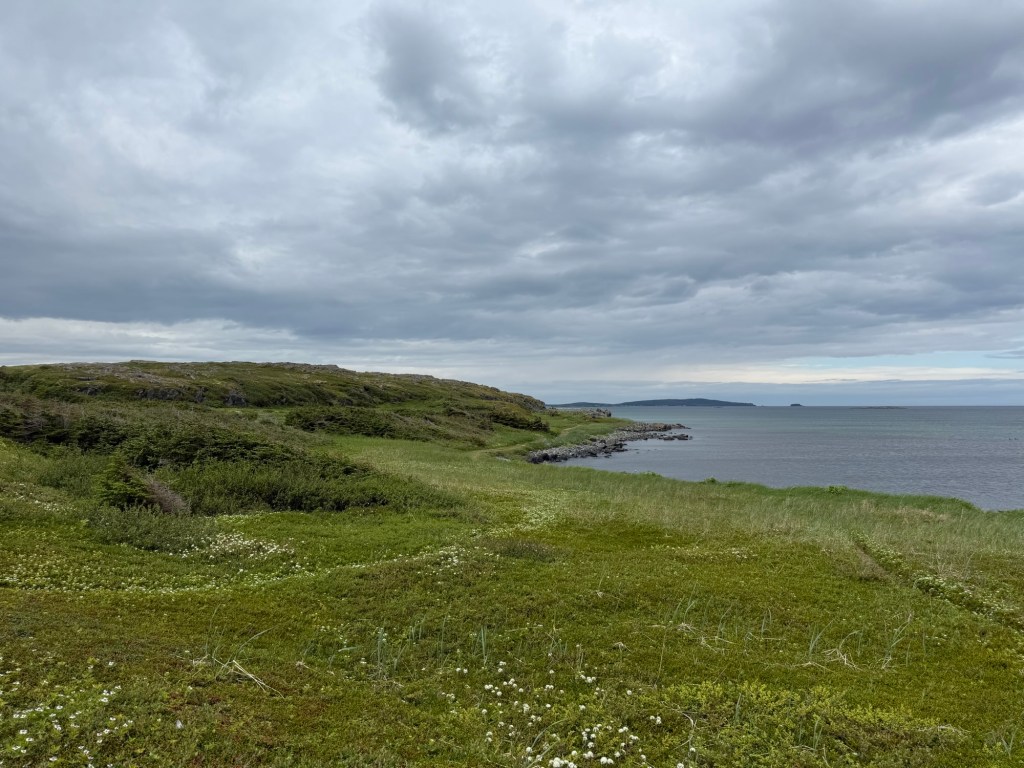
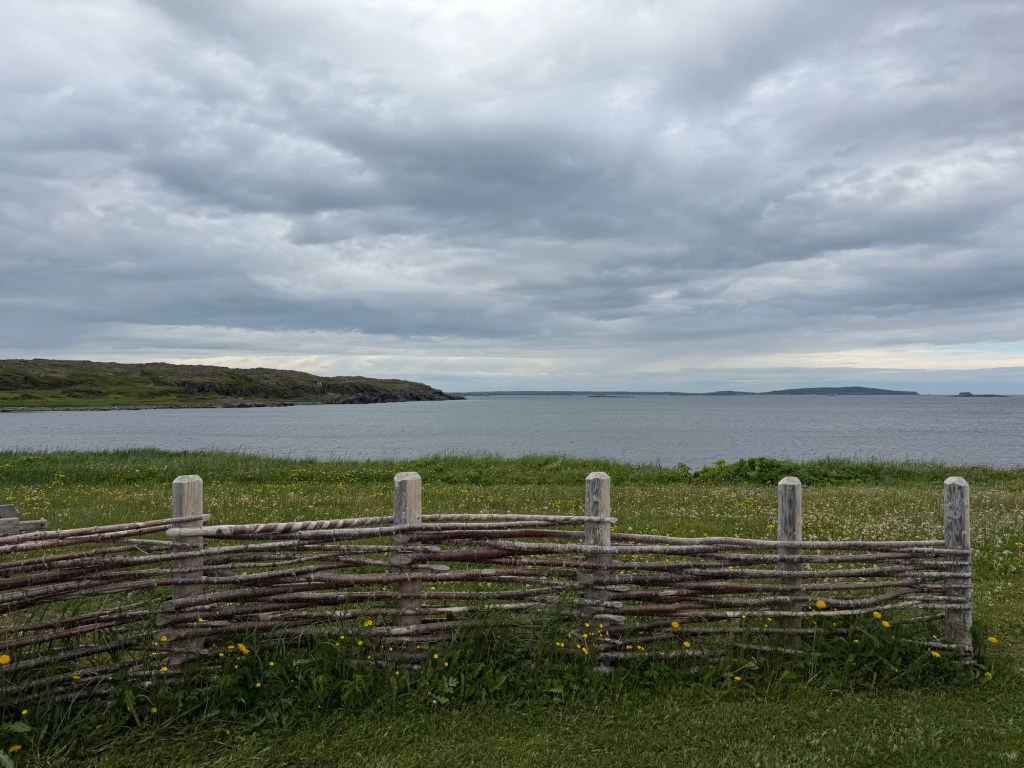

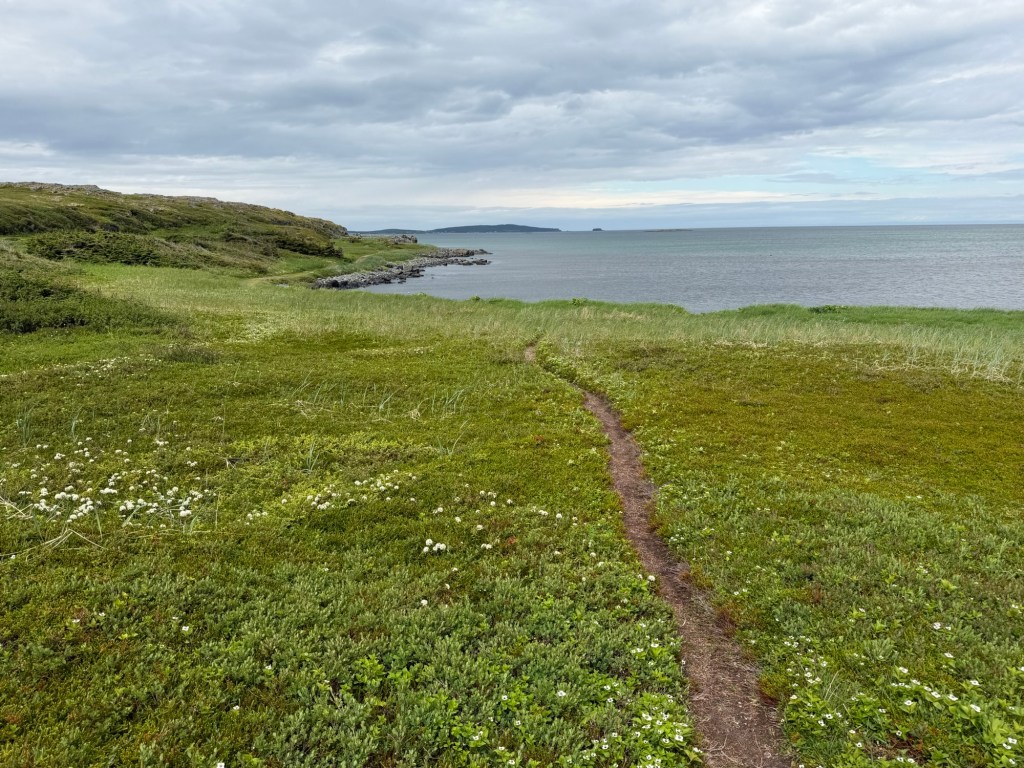
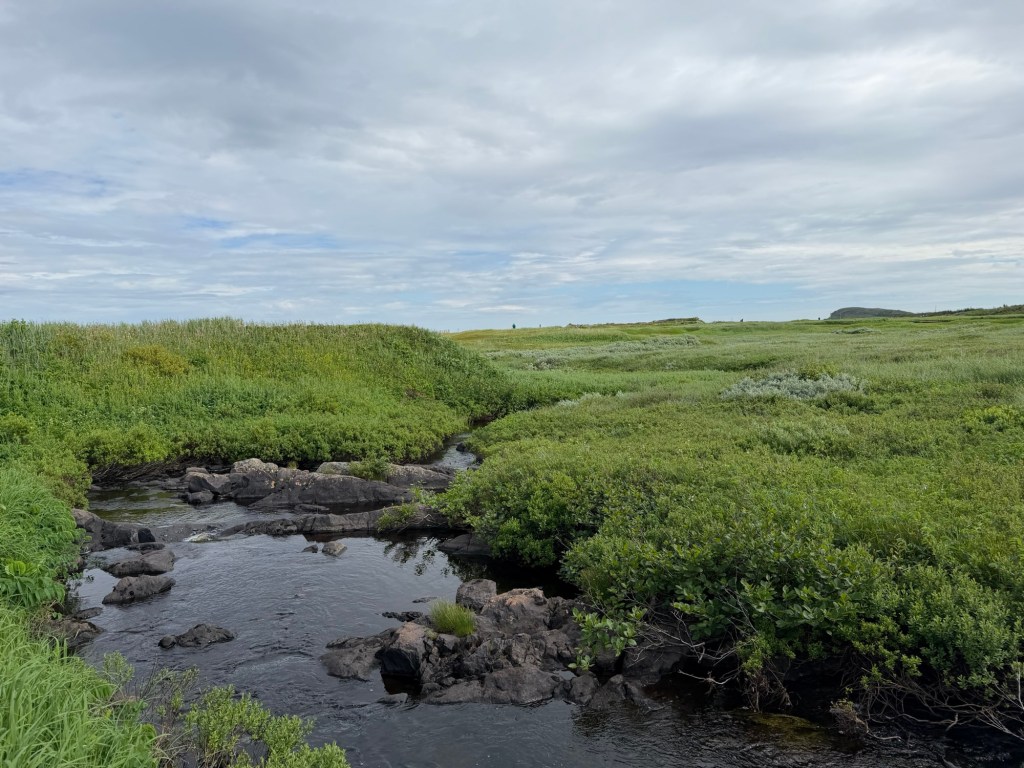
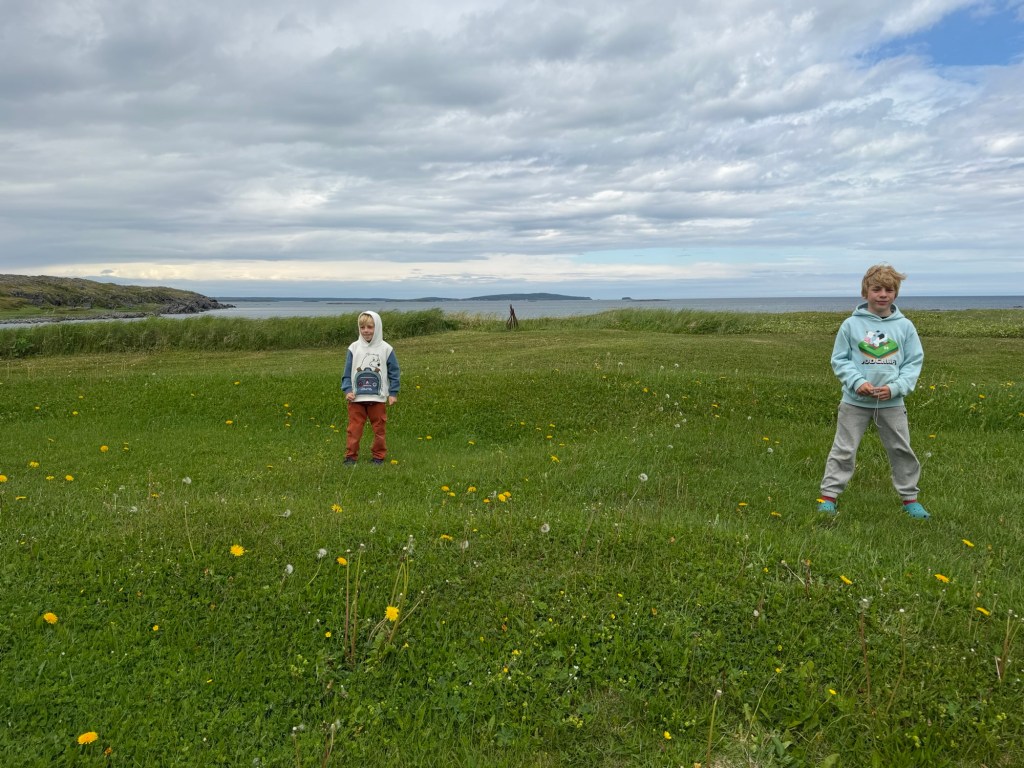
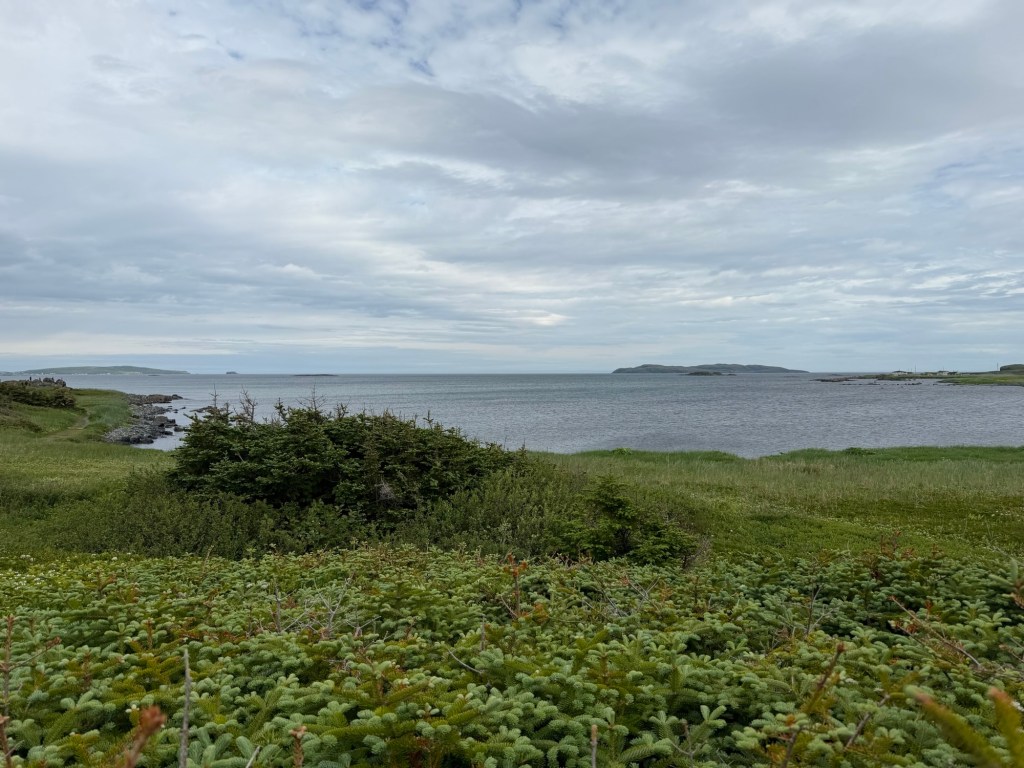
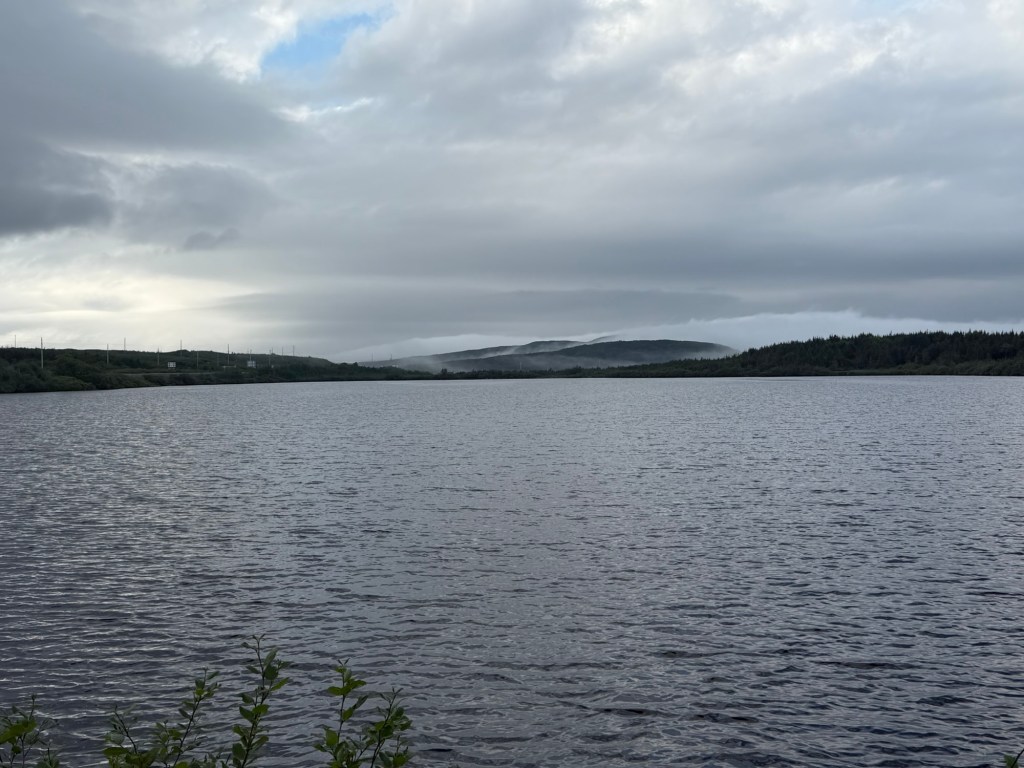
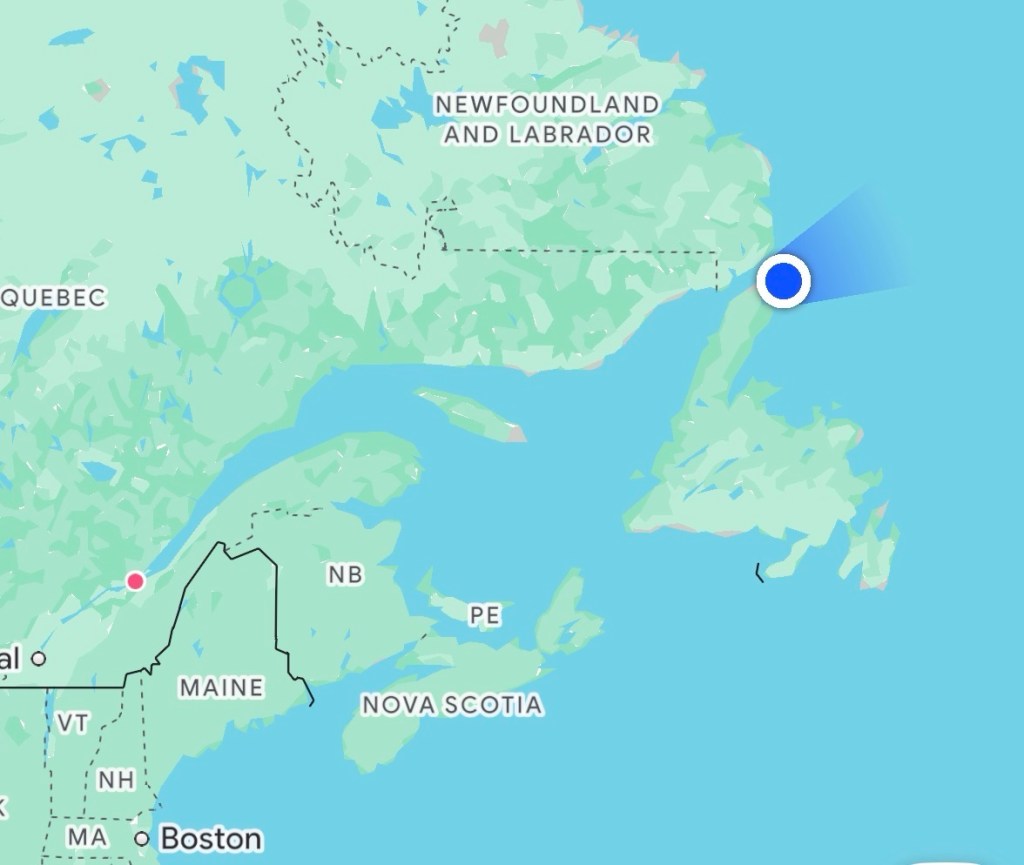
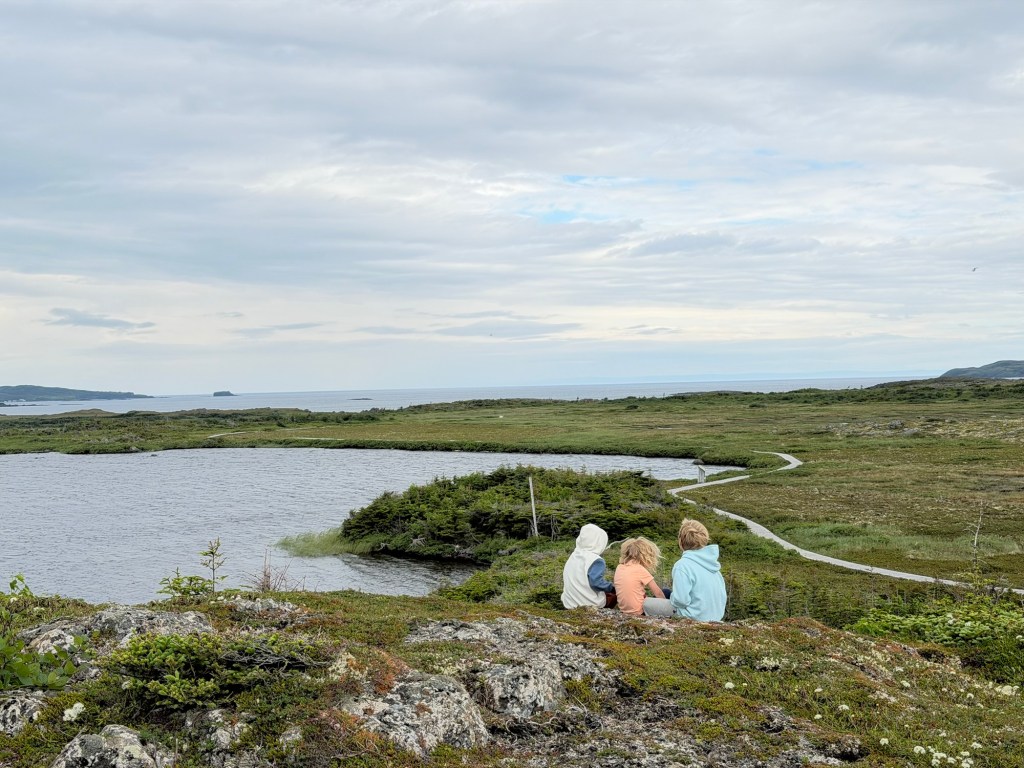
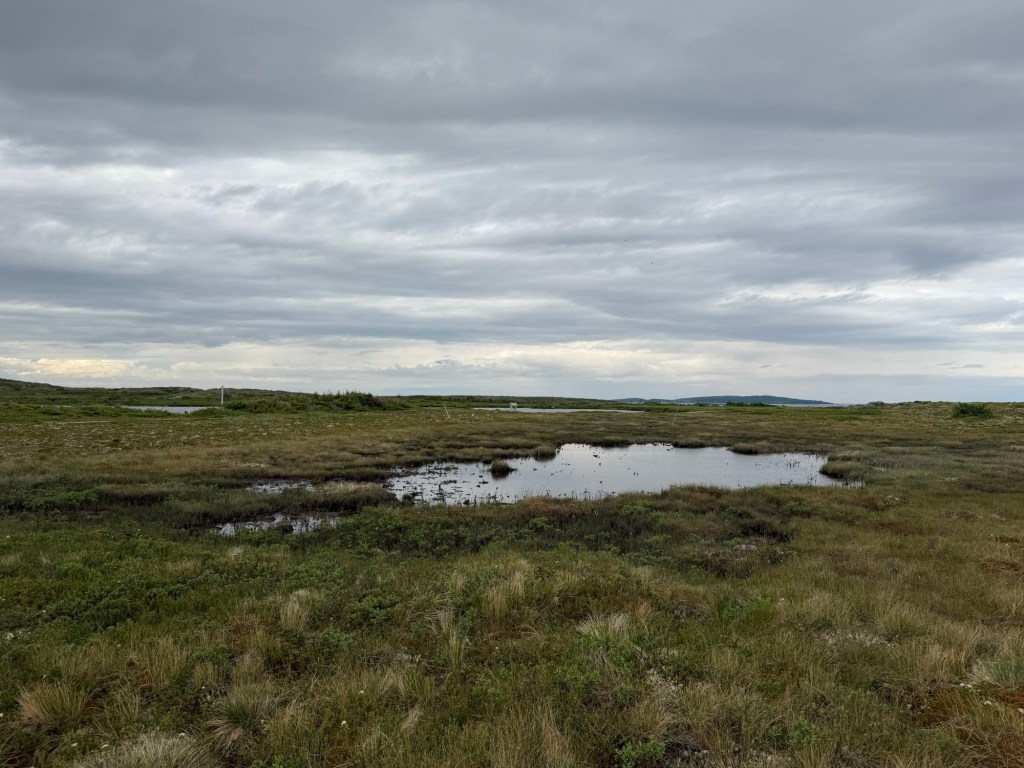
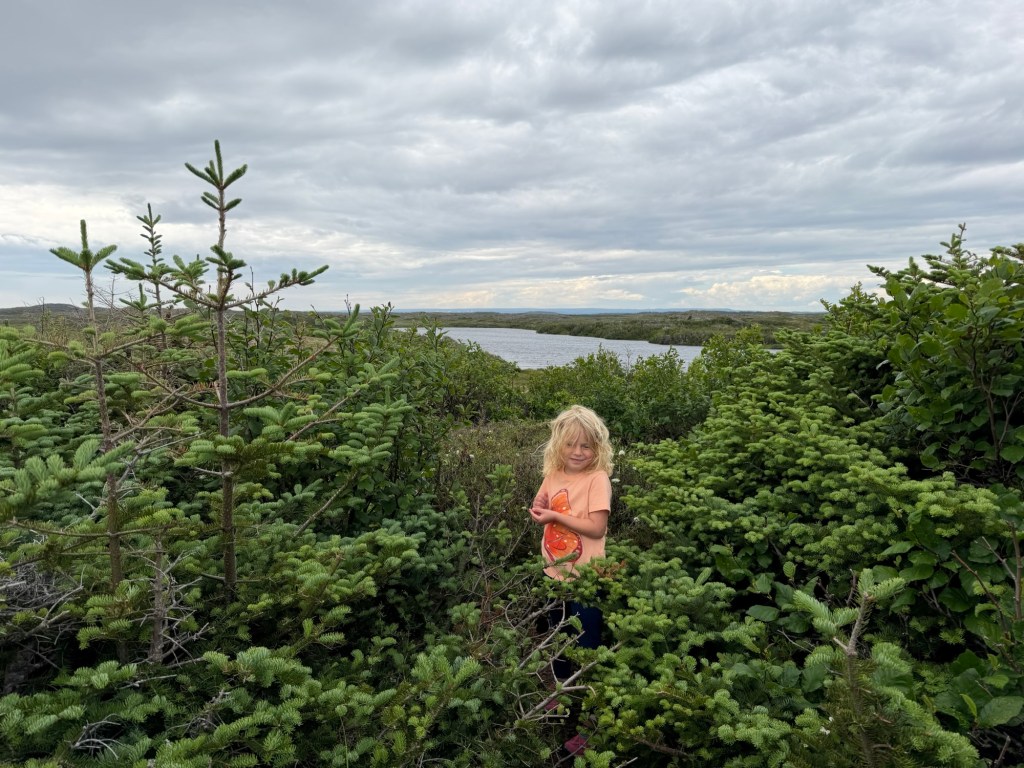
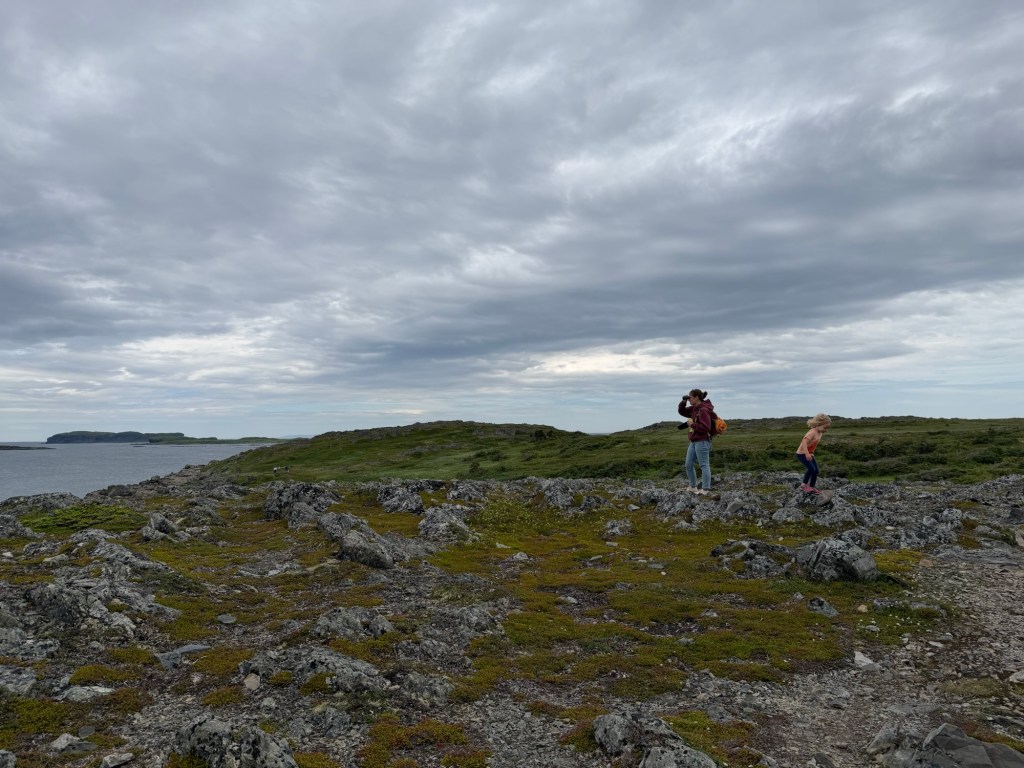
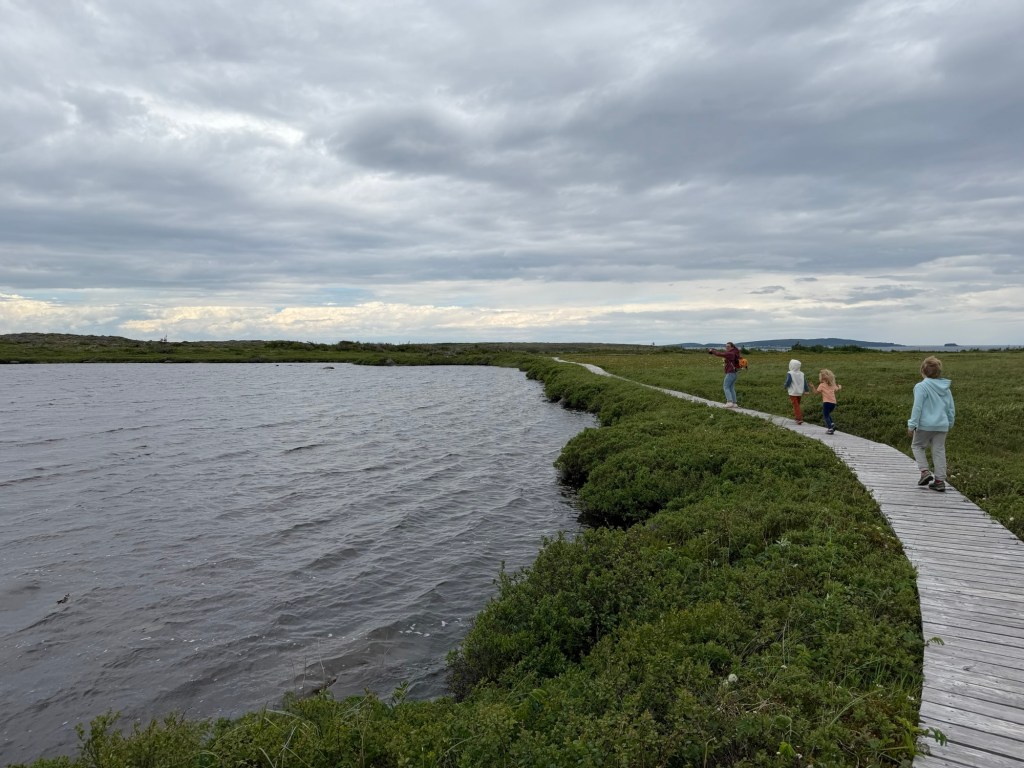
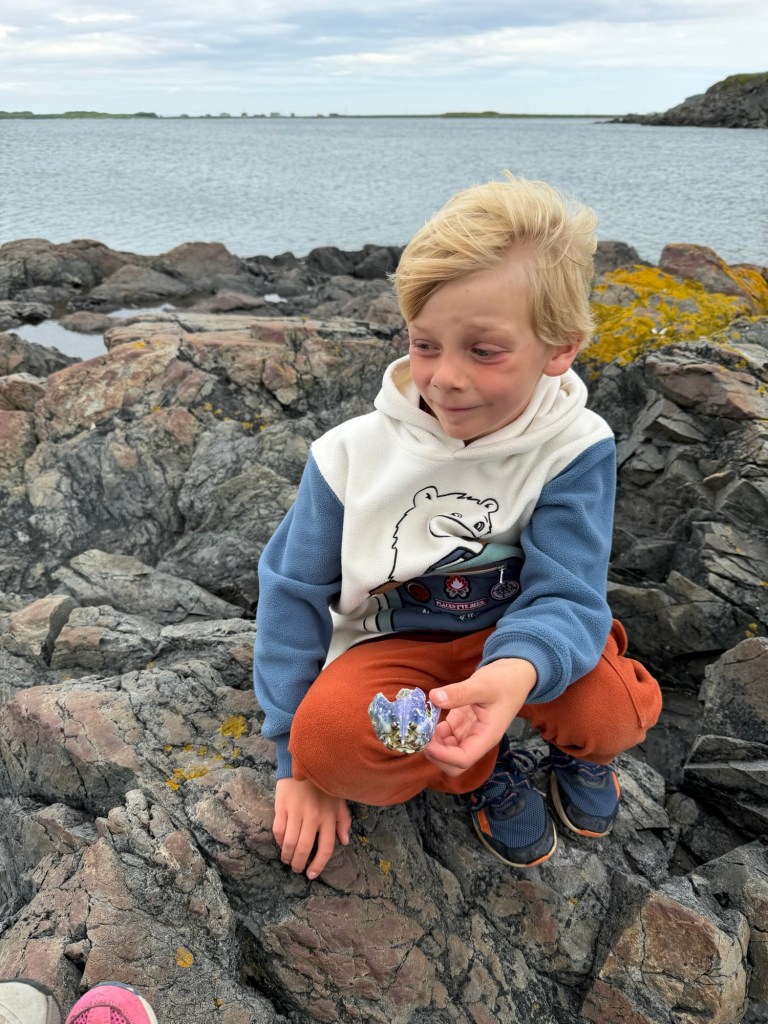
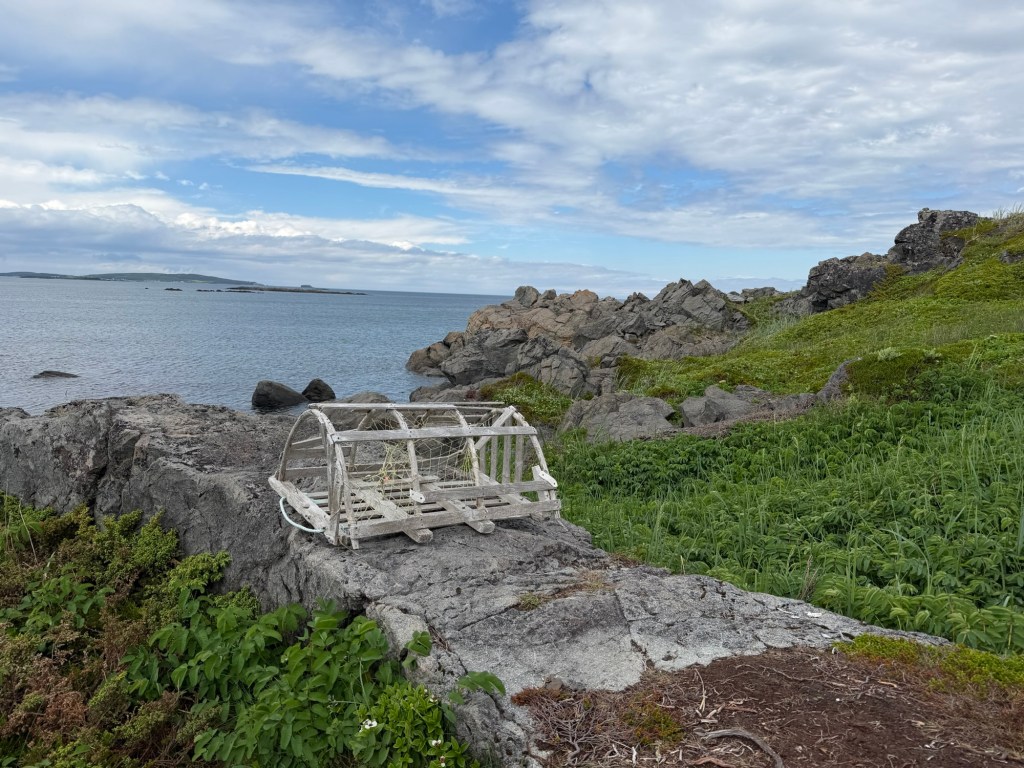
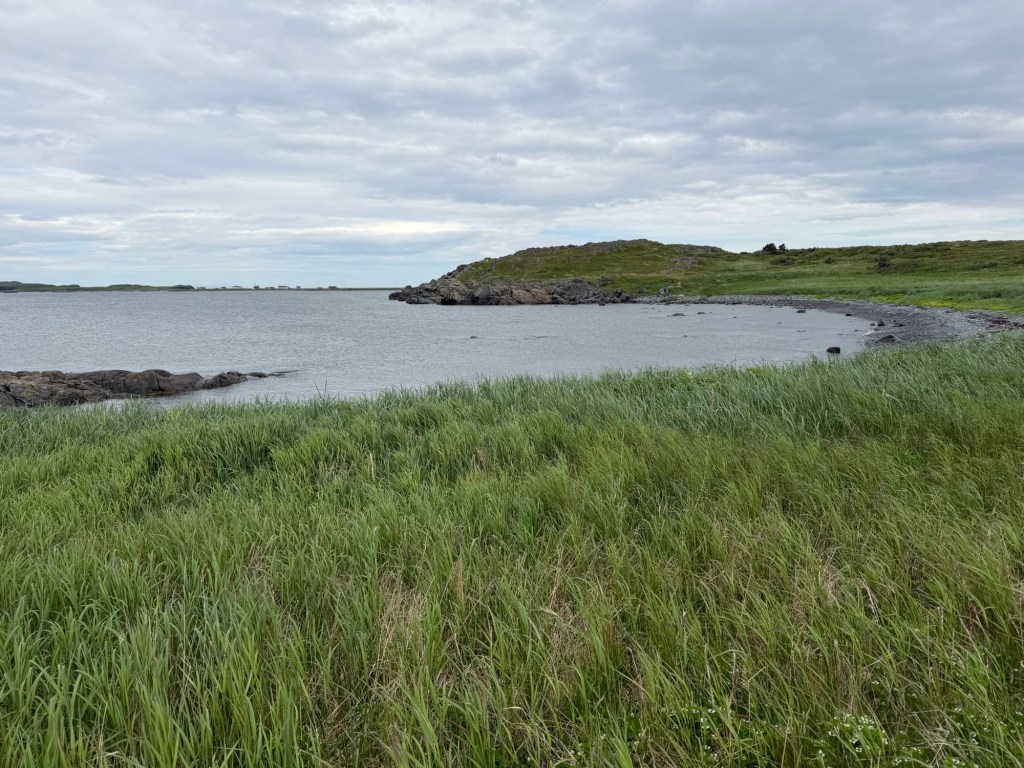
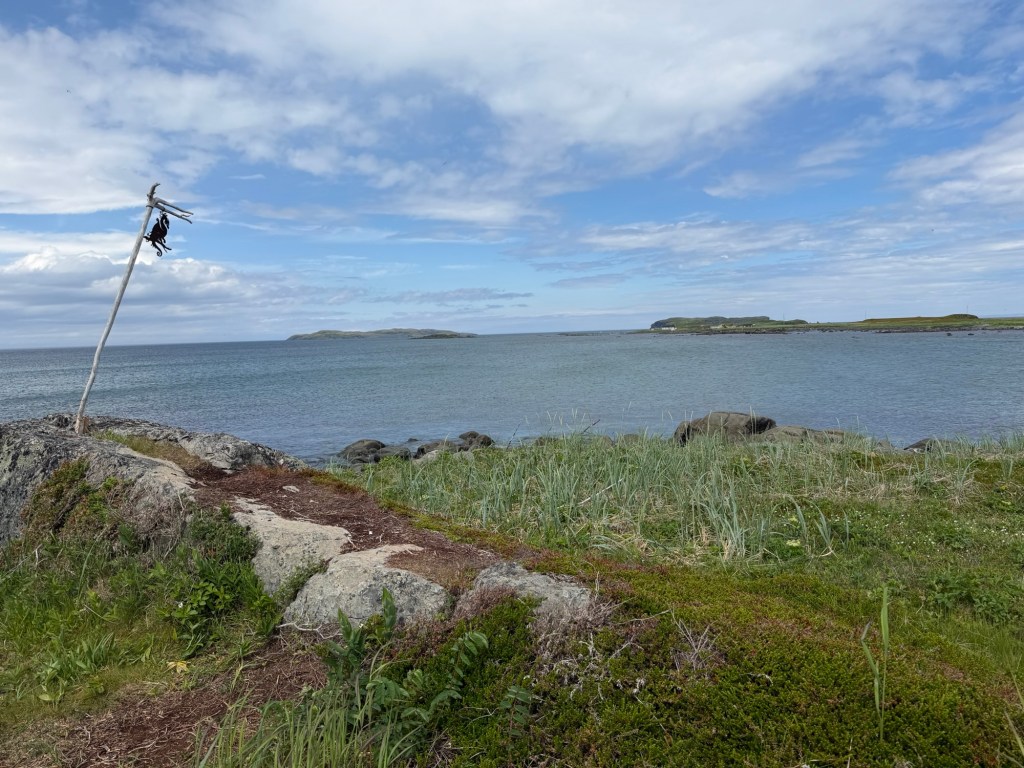
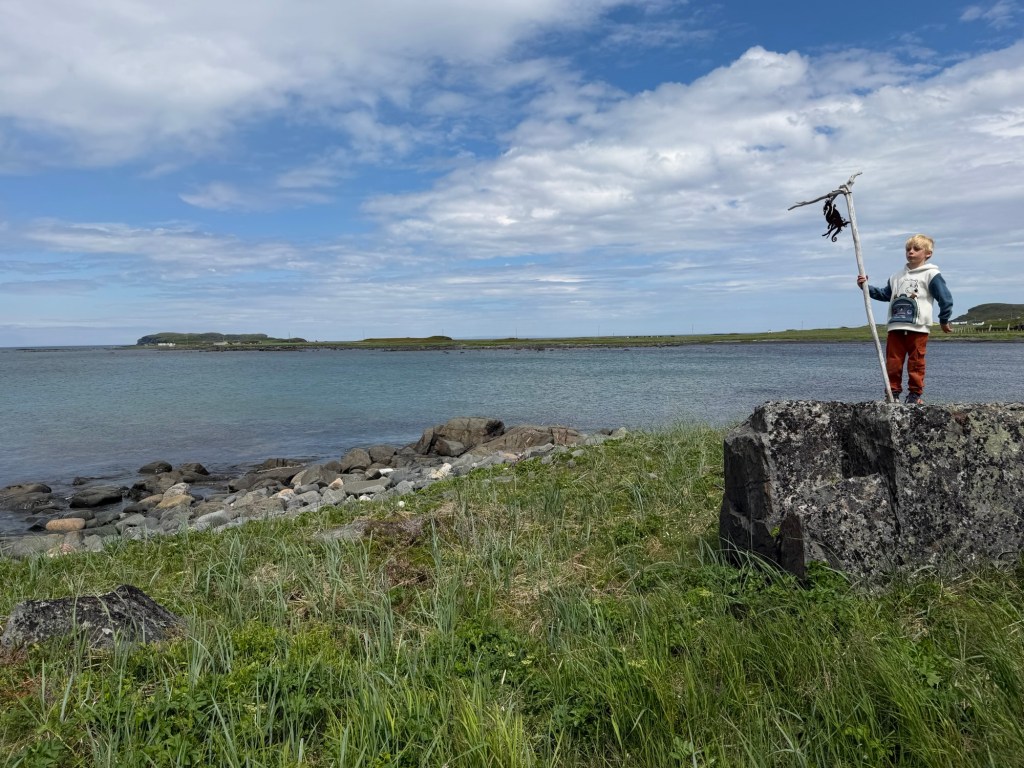
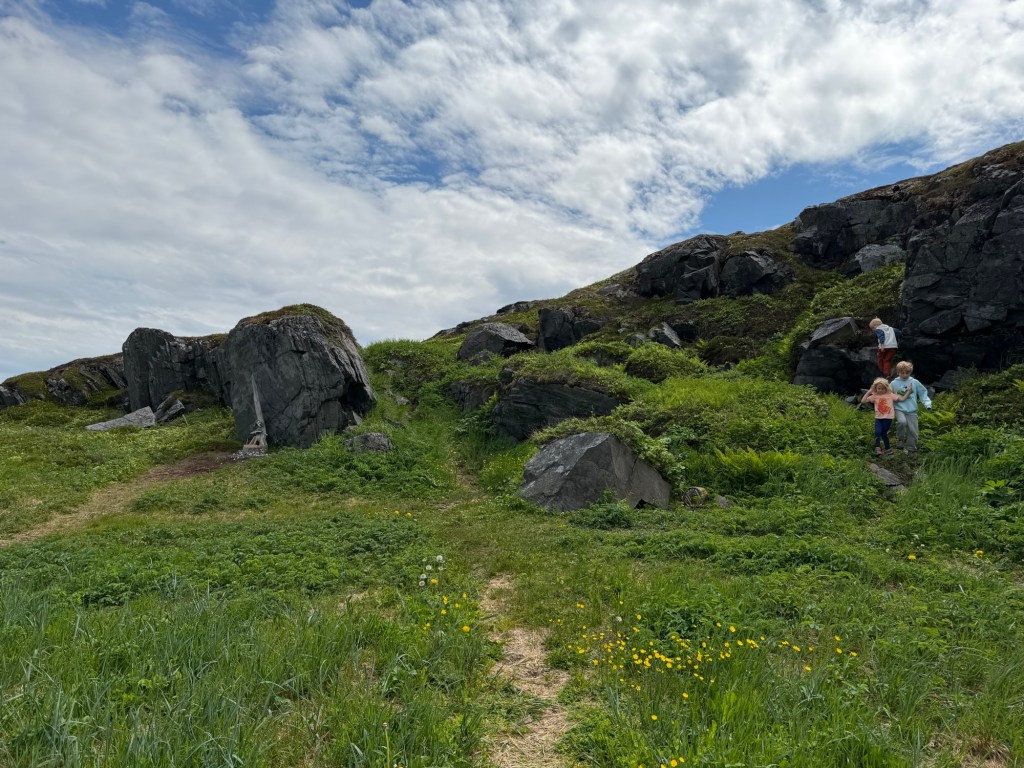
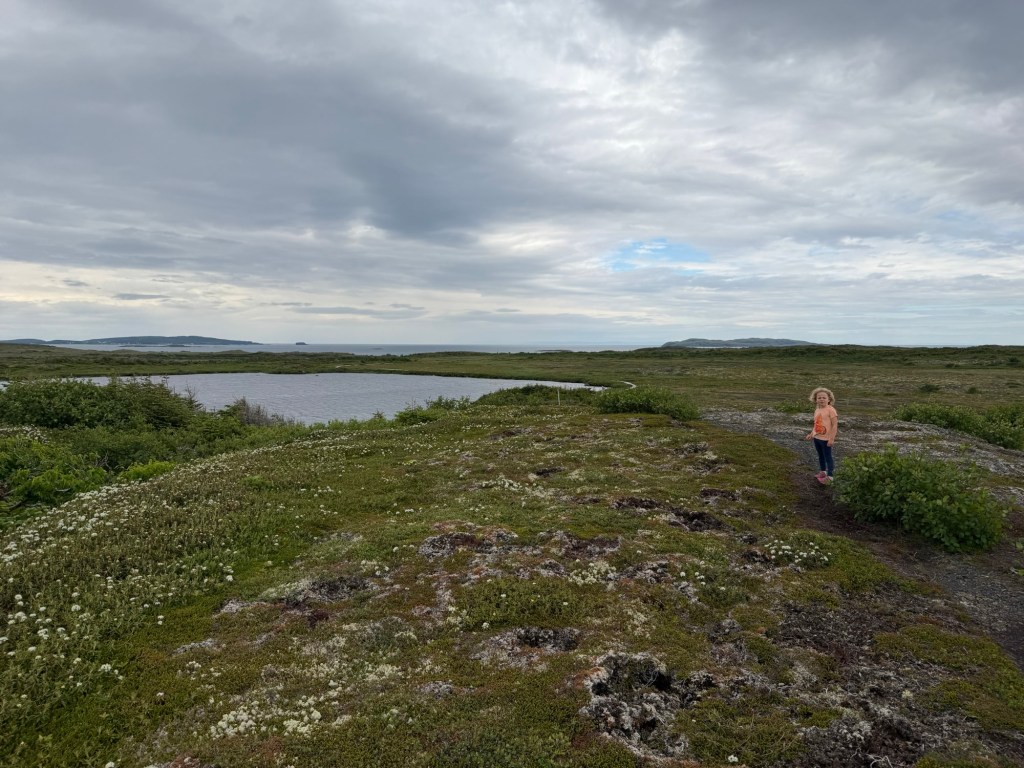
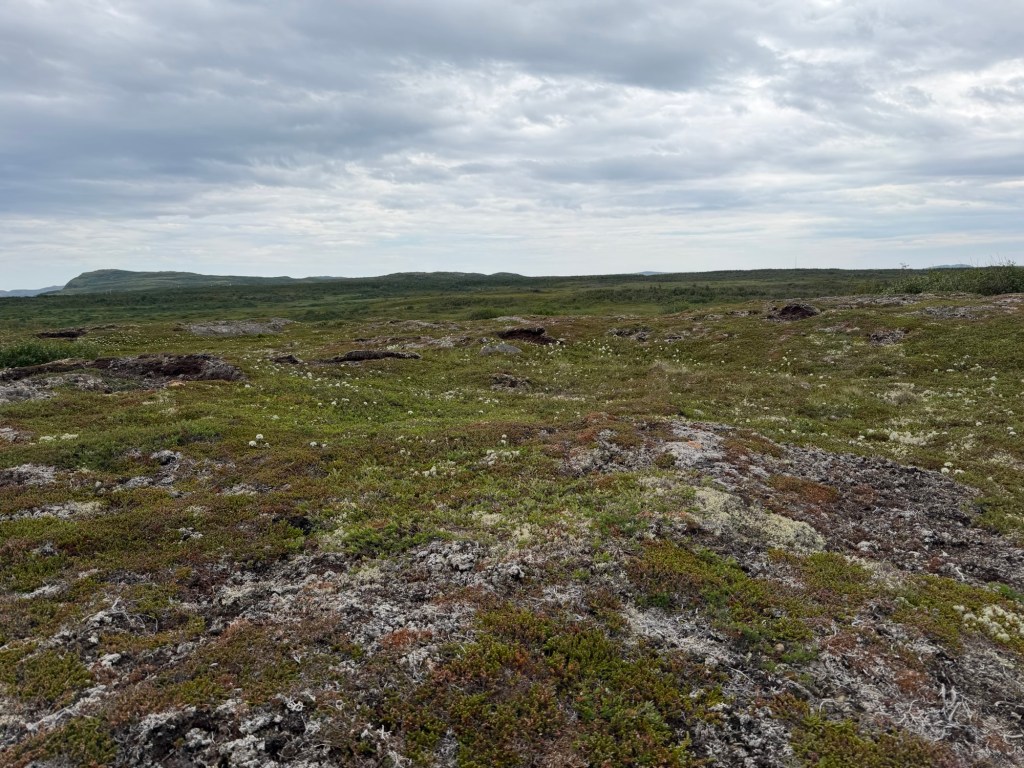
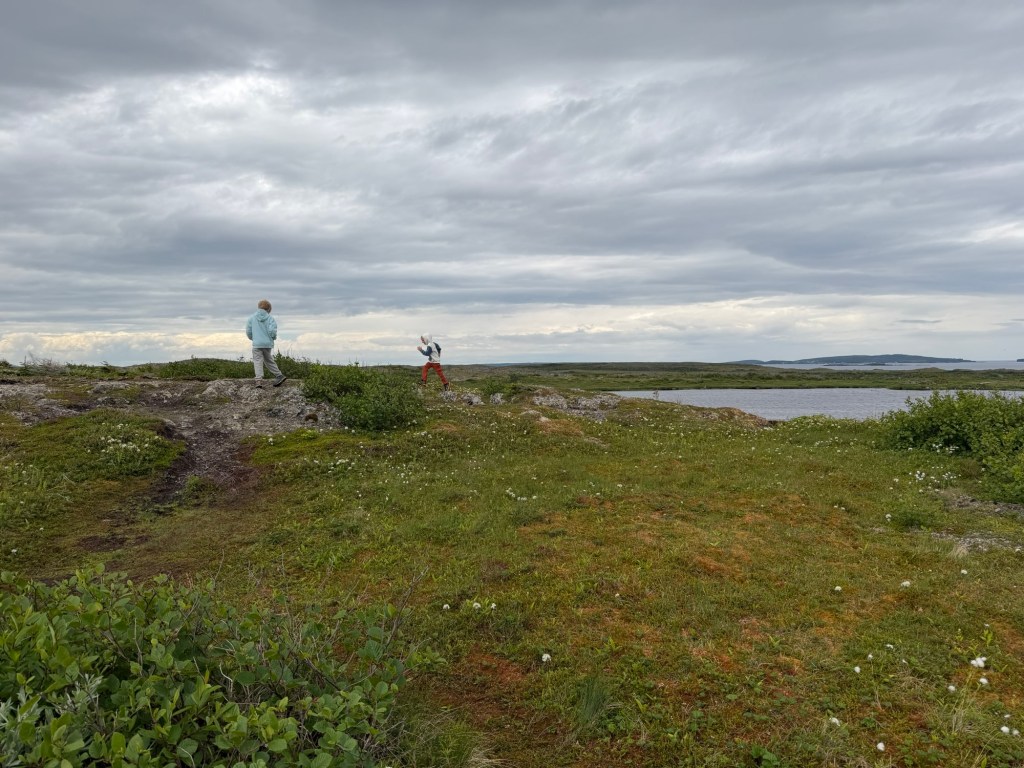
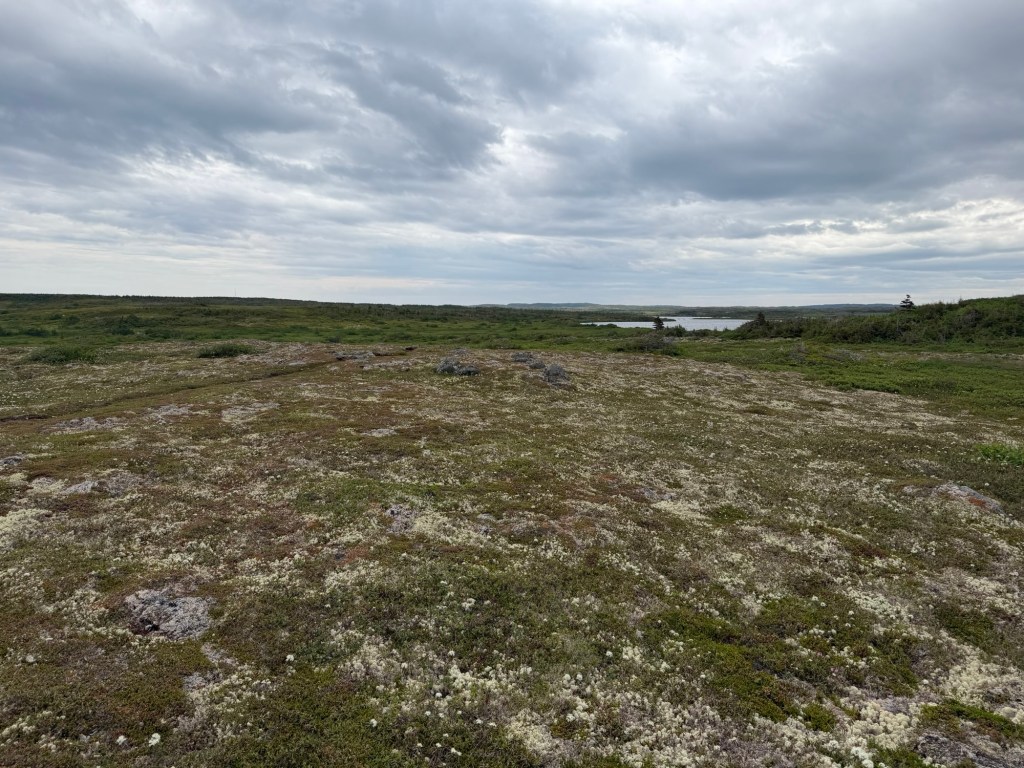
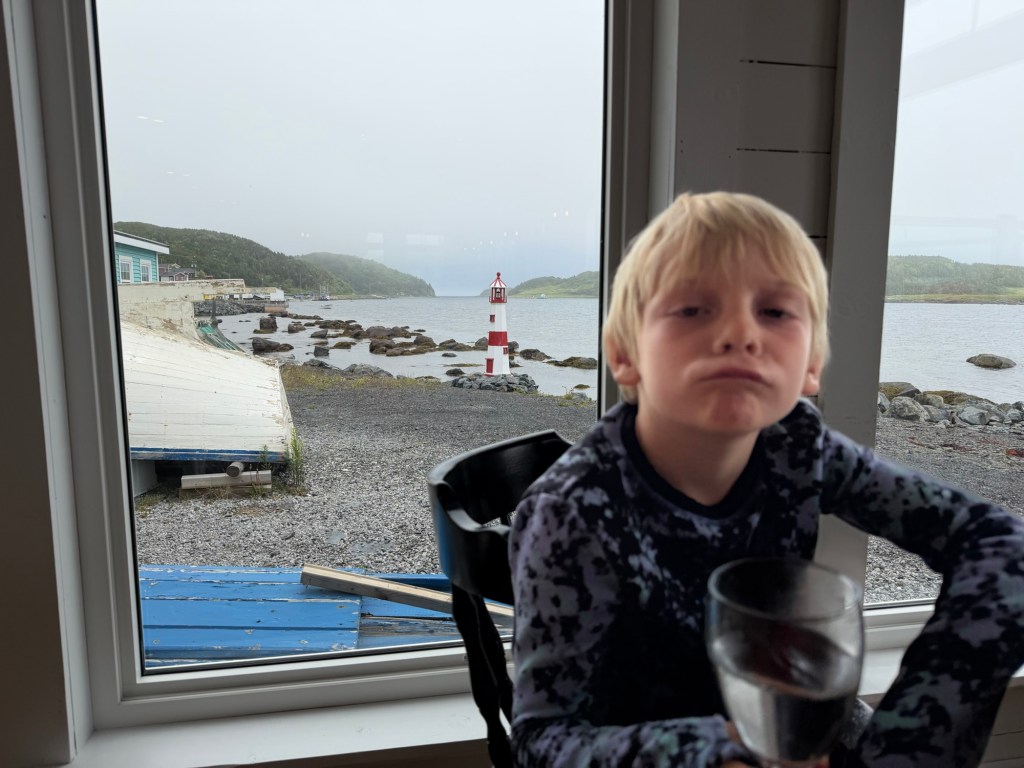
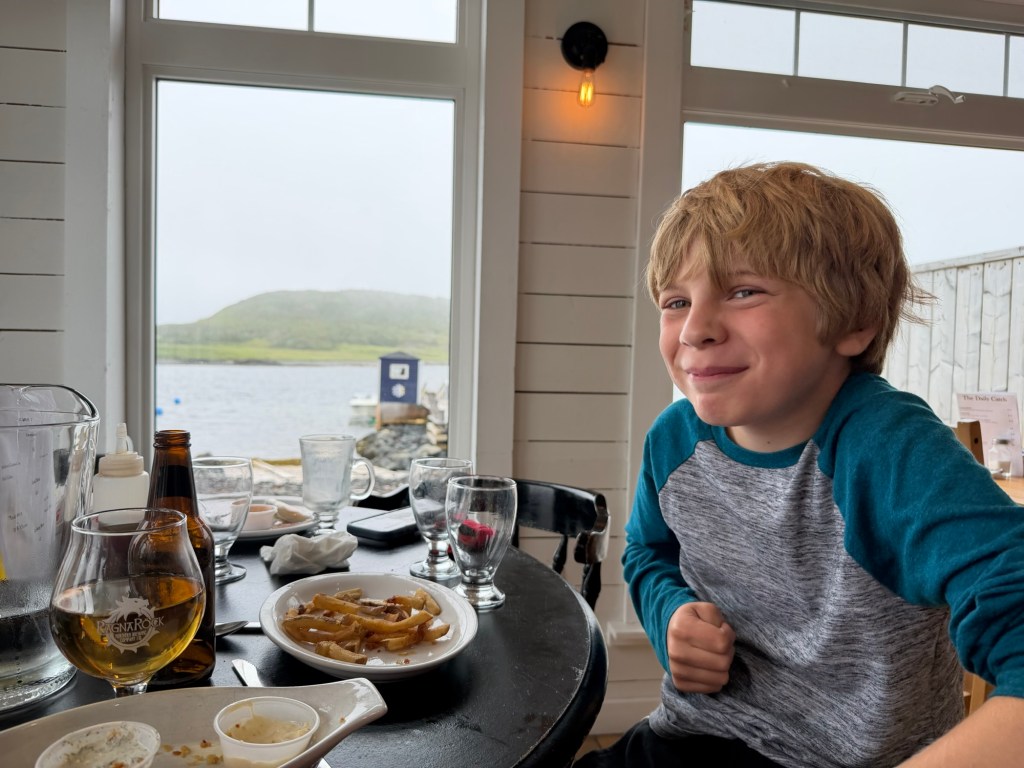
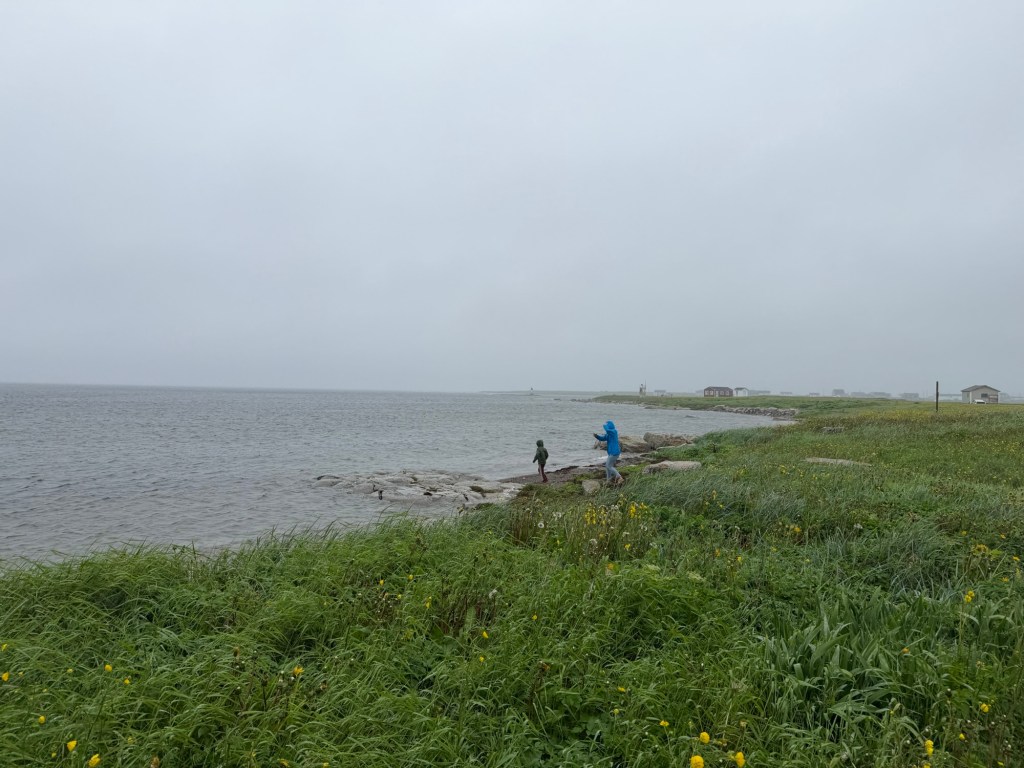
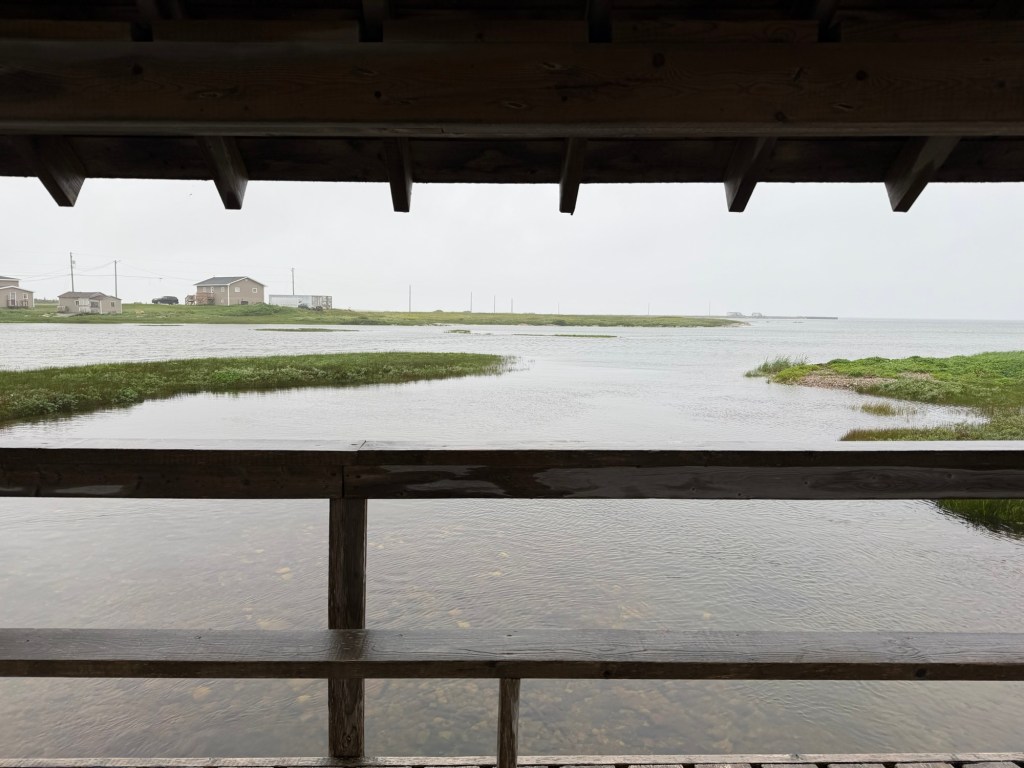
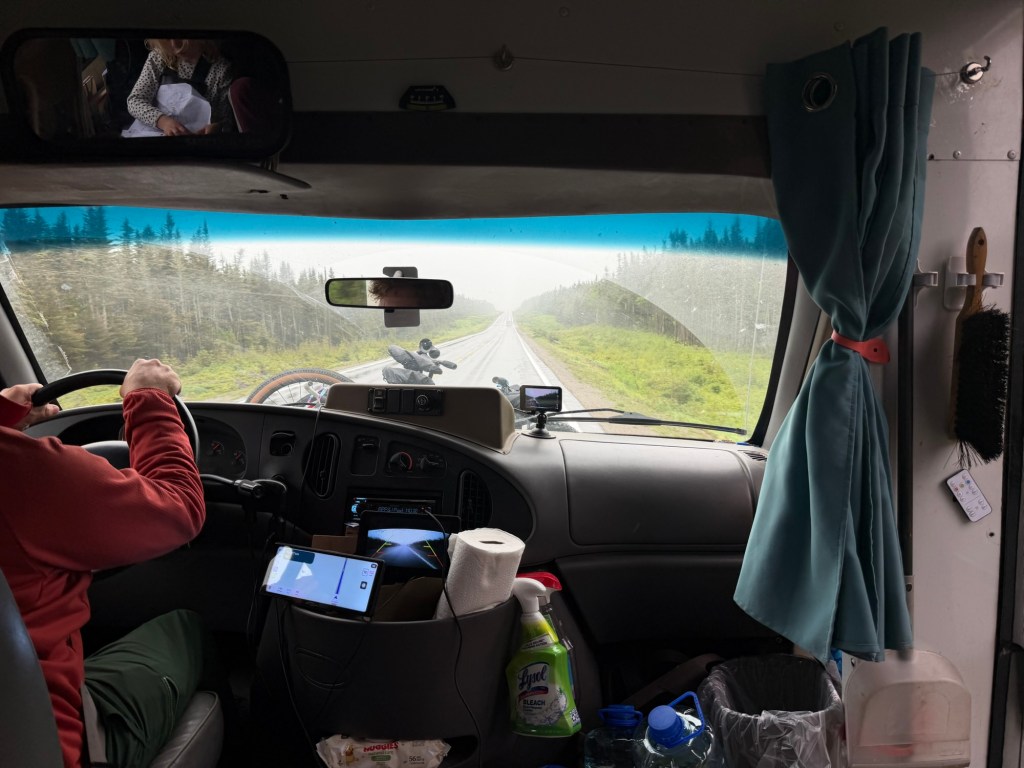
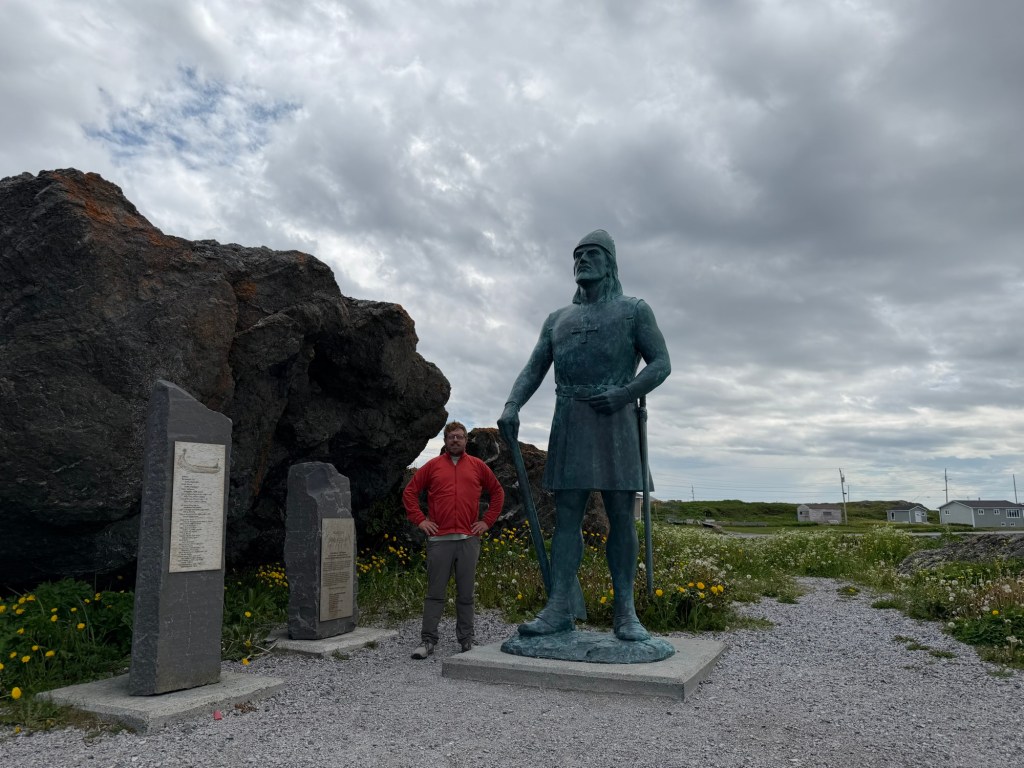
The weather up here is hard on the roads and driving here is exhausting. It’s like playing that old original arcade racing game where you have to keep pressing left or right to go back and forth to avoid potholes, you can never go straight for too long, and often the potholes take up 3/4 of the road. Luckily there is absolutely no one at all anywhere on the road, so we have twice as much room to try to swerve back and forth to dodge the ponds in the road. We are in an entirely different environment again. The land here is much flatter, any trees that exist are short and shaped by the prevailing wind. The growing season is short so every flower is in bloom now and wild berries are soon to follow. The flat areas are covered in delicate looking arctic mosses, lichen, and shrubs which are in fact, everything but delicate. These are some of the toughest plants on earth, each one so unique in its path of evolution to survive here. This drive is our second straight rainy day and with today being our longest drive so far, we could have hoped for better leg stretching weather.
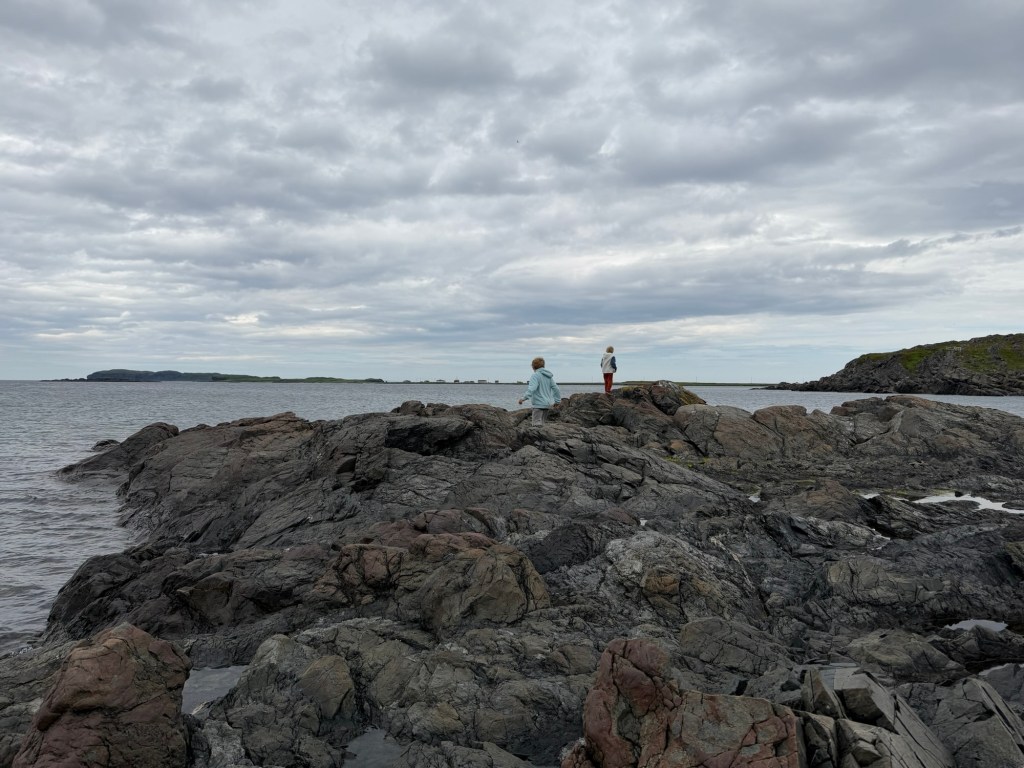
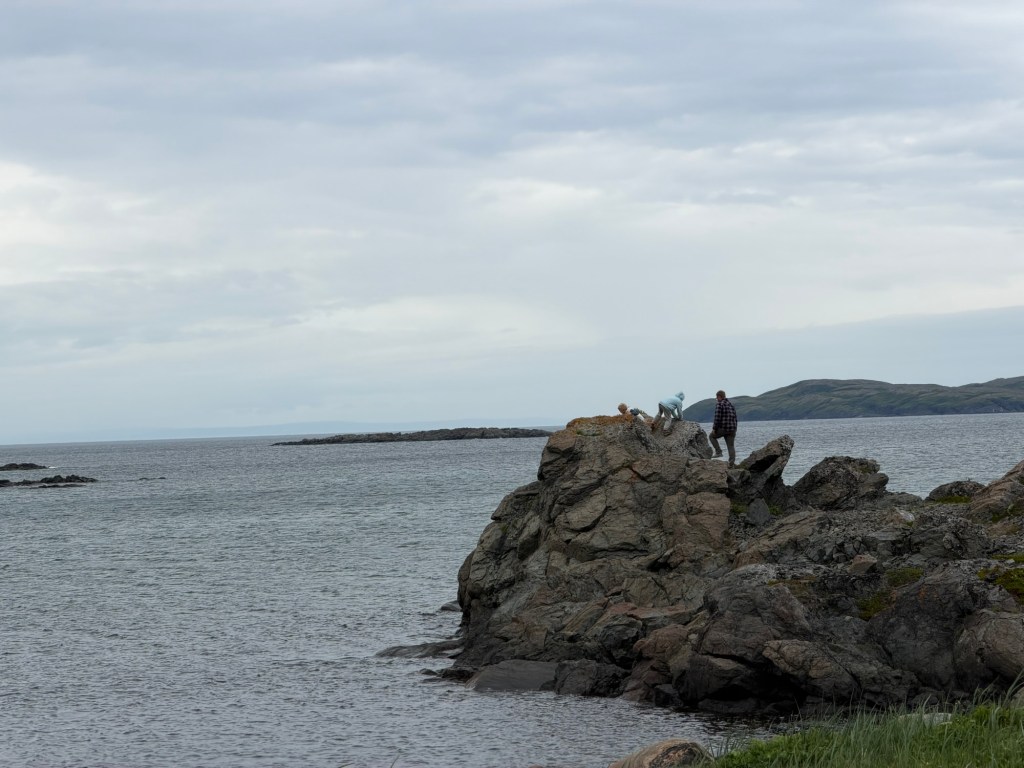
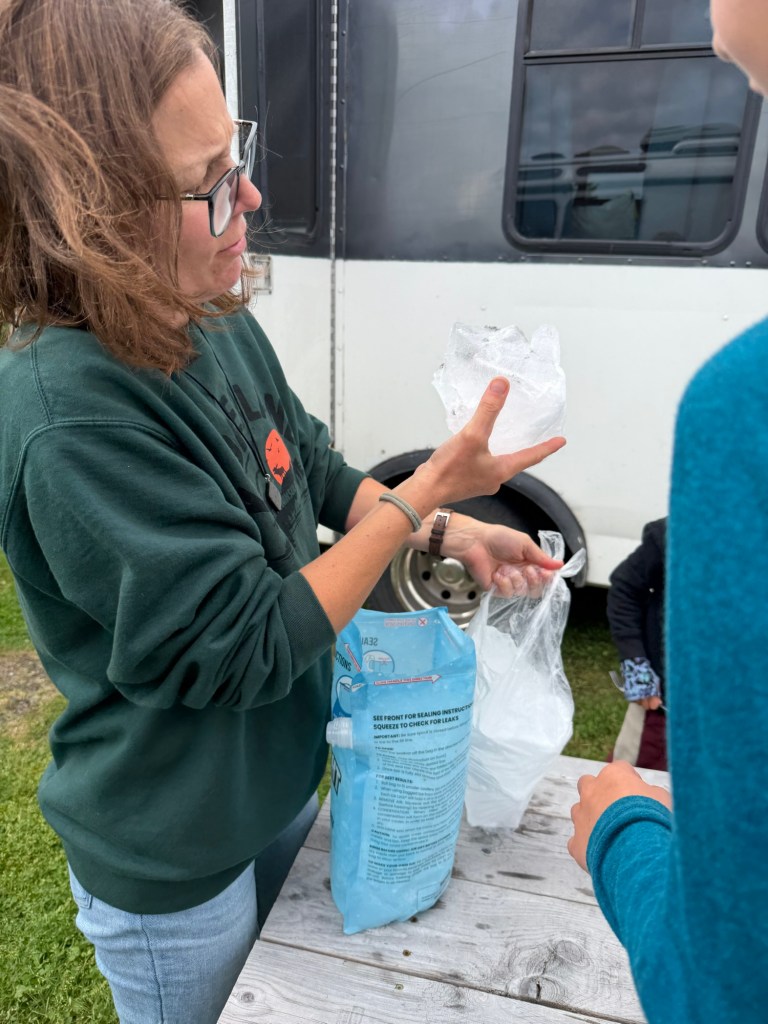
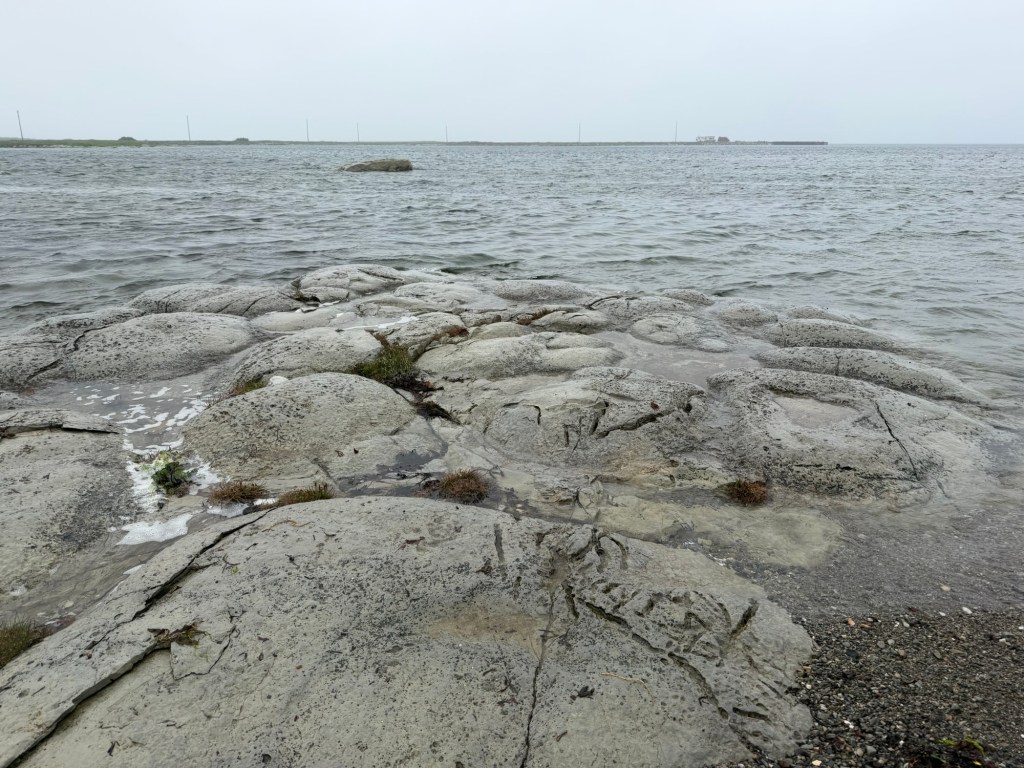
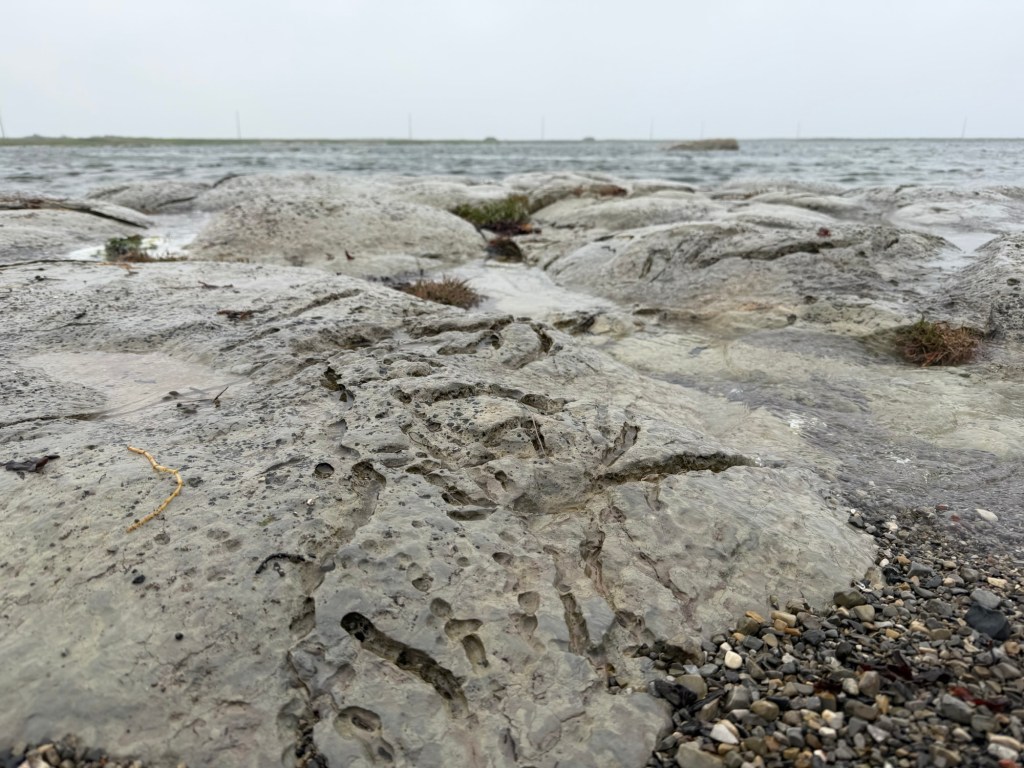
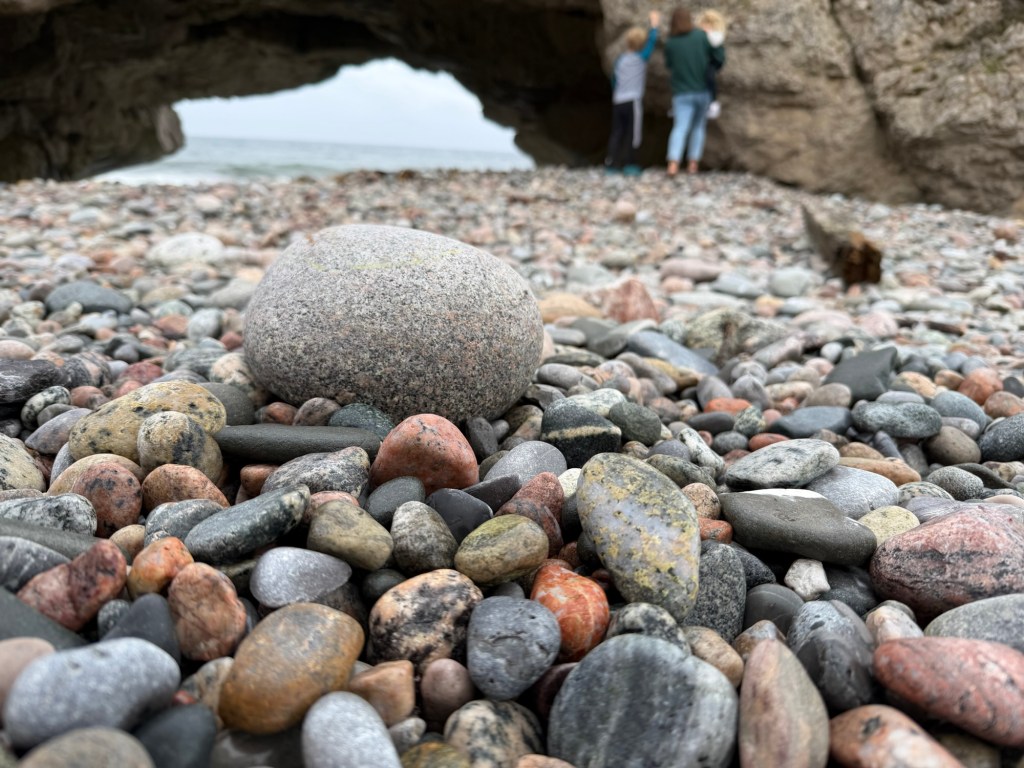
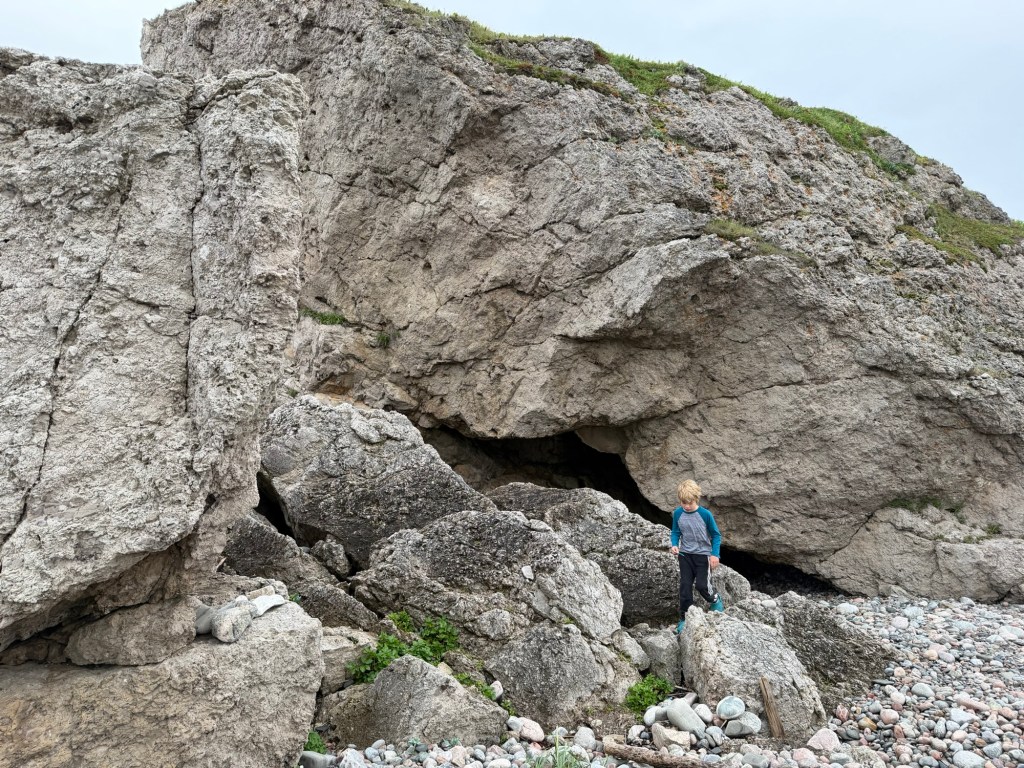
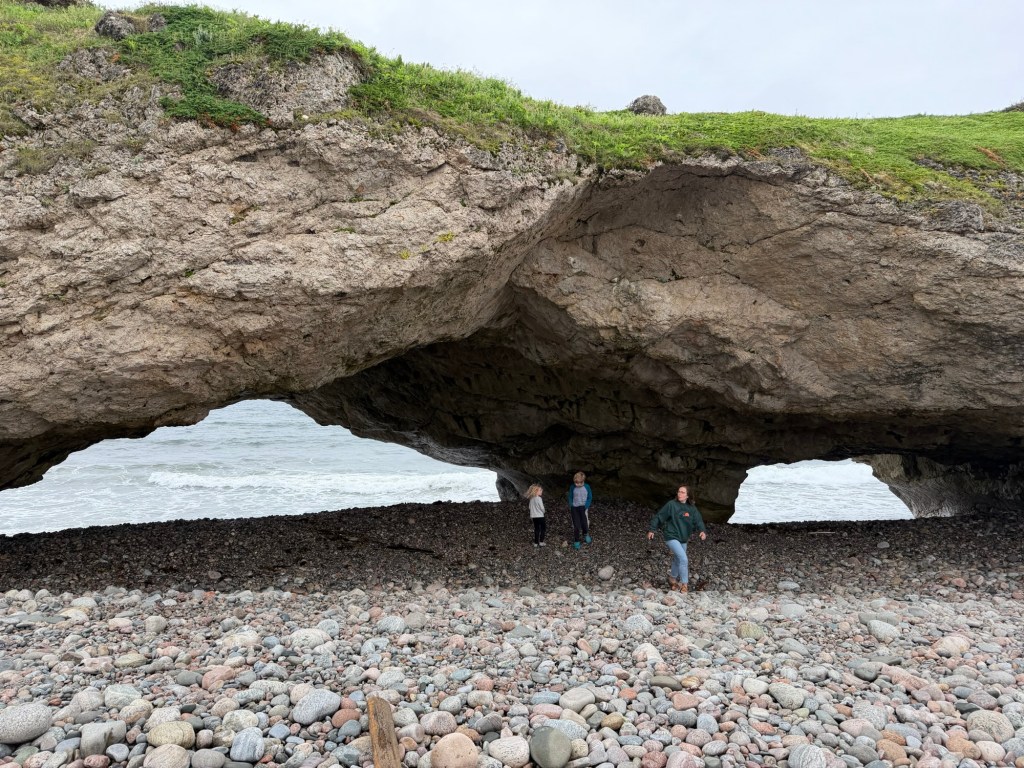
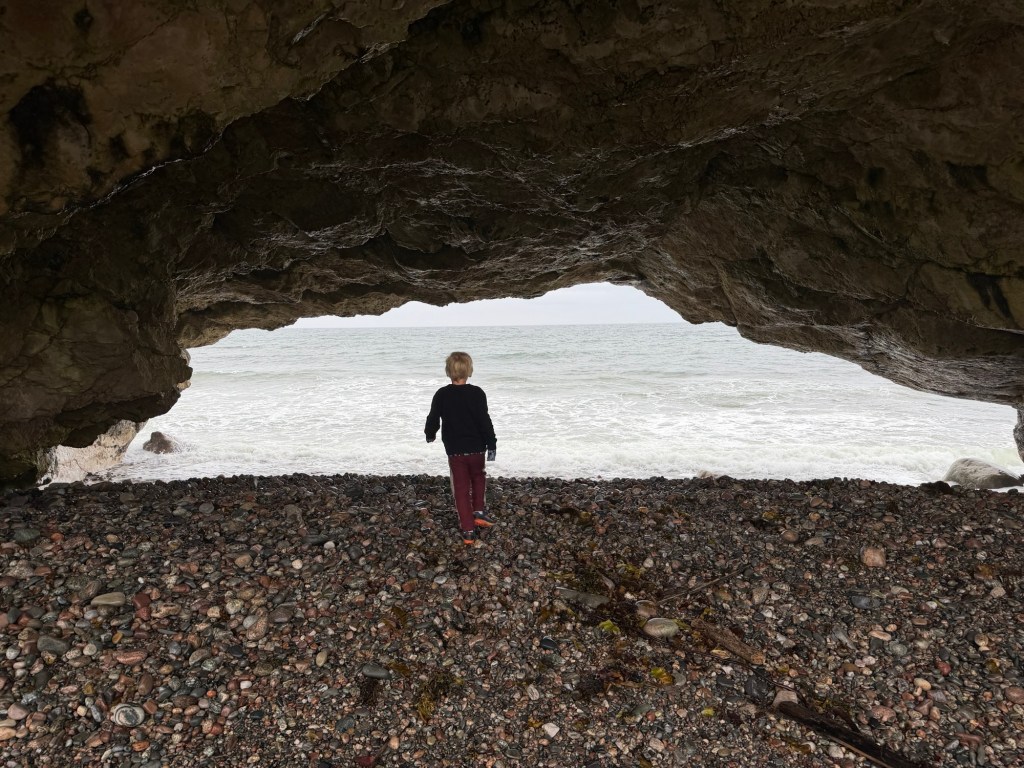
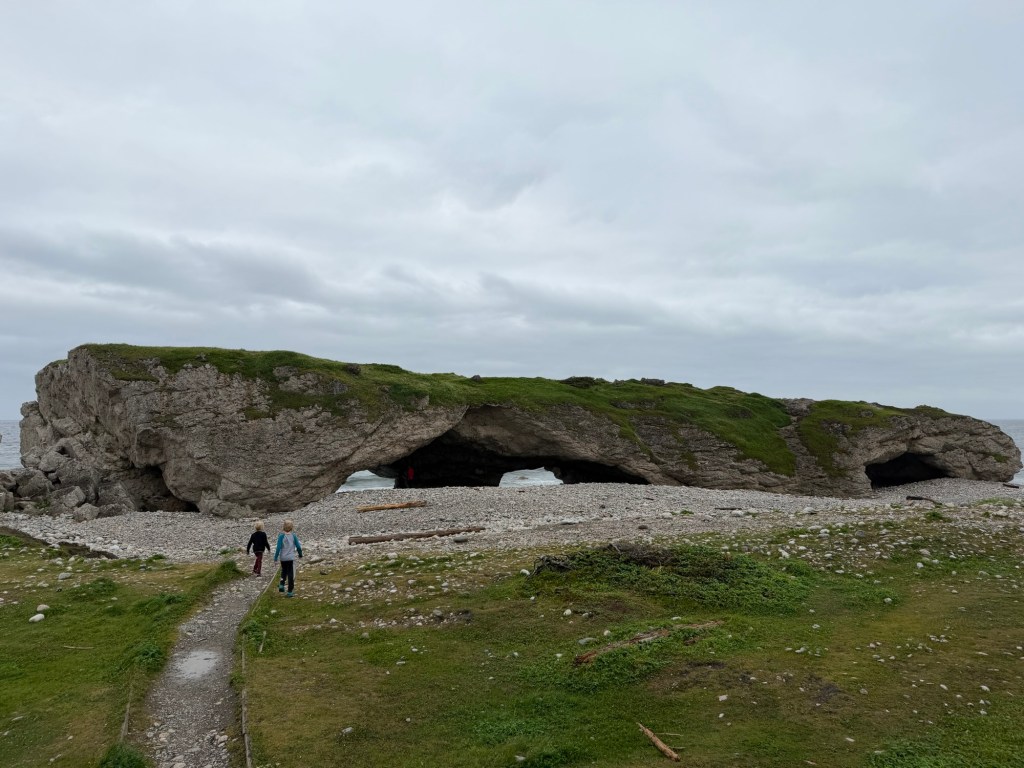
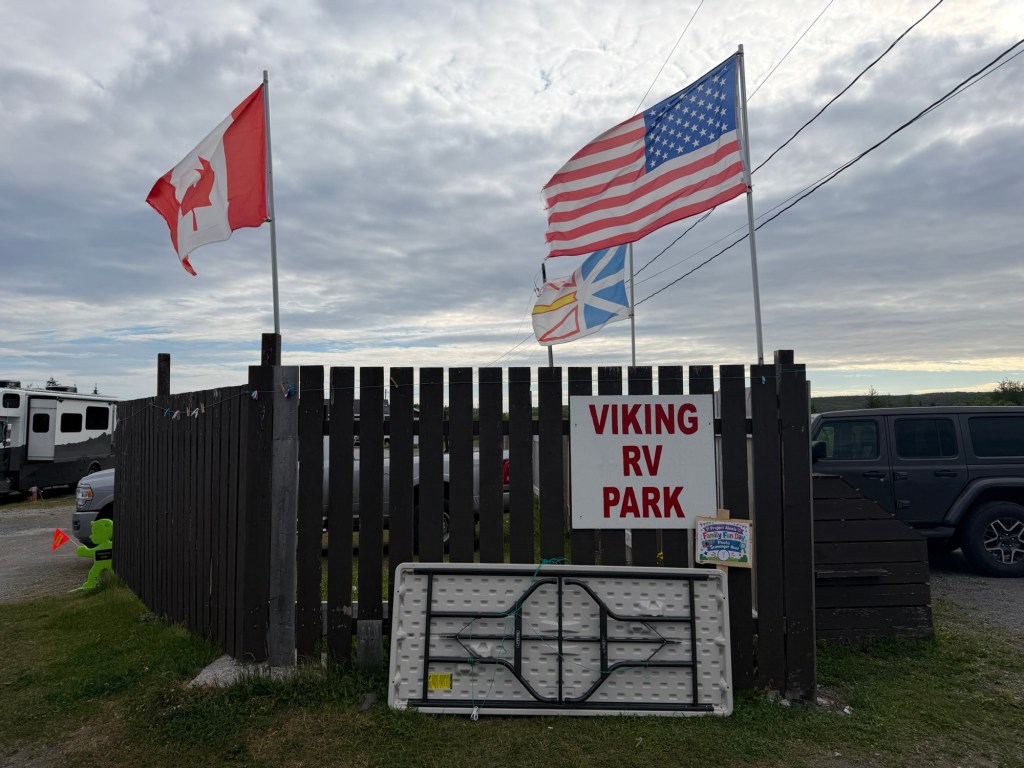
Amy does take us off the main road to see some sea arches and to chase some Thrombolites. These limestone mounds were built up by colonies of ancient ocean dwelling critters that have been left behind millions of years after their extinction. Heavy rain be damned! If my baby wants to see a Thrombolite then we are gonna get our rain gear on and hike to some Thrombolites. It’s additionally charming to get to see some of the many tiny towns that dot the northern coast. Many of these towns have less than fifteen residents and face unique challenges with employment and people moving to the cities on what is such a huge rural island. It’s so huge, it has to maintain more miles of road than the other Province’s we went through but with much lower population. When we buy a bag of ice here it is legitimately just chucks broken off a floating iceberg. It’s cheaper here to take your boat to the berg than to pay to freeze water. It feels sophisticated to have iceberg ice in the cooler. The Viking site appears to be the only reason to visit this far north and many people and their rigs are familiar to us as we all make the long trek together North. We often wave to “that woman who let me skip her in the shower line.” Or a nod to “the guy who filled his water right above our electronics.” We are “the people with kids.” As most people seem to only find time to get here in retirement.
The history of this area is fascinating, ever since the Basque settled here in the 1700s people have been connected from community to community by boat. The only way to move about the island was along the coast or sled dog for small distances. With the arrival of the train and eventually the highway the entire livelihood of the island has been reshaped. With access to the middle of the island, new areas opened for development while some areas that were previously prosperous were now cut off from the highway, outdated and hopelessly along the coast. These problems were further exacerbated by the extremely controversial Canadian all out ban on Cod fishing. The people of this island not only relied on cod as a keystone of survival for 500 years, it was also a huge part of the economy with most islanders connected to the fisheries in some way. The truth is, that by 1992 Cod populations had dropped to less than 1% of previously common levels. Technology in nets and trolling had gotten to good, they’d caught almost every fish. For those wondering, in 2024 Canada opened Cod fishing season again but with strict catch limits, but the cultural shift over the past 30 years had been swift.
This area also has a rich and fascinating native peoples history which persisted along the coast living off the whale, seal, and caribou the environment offered. I can’t imagine it was an easy life in this environment but this must have seemed like a tropical paradise to the people I am really here to discuss; The Vikings.
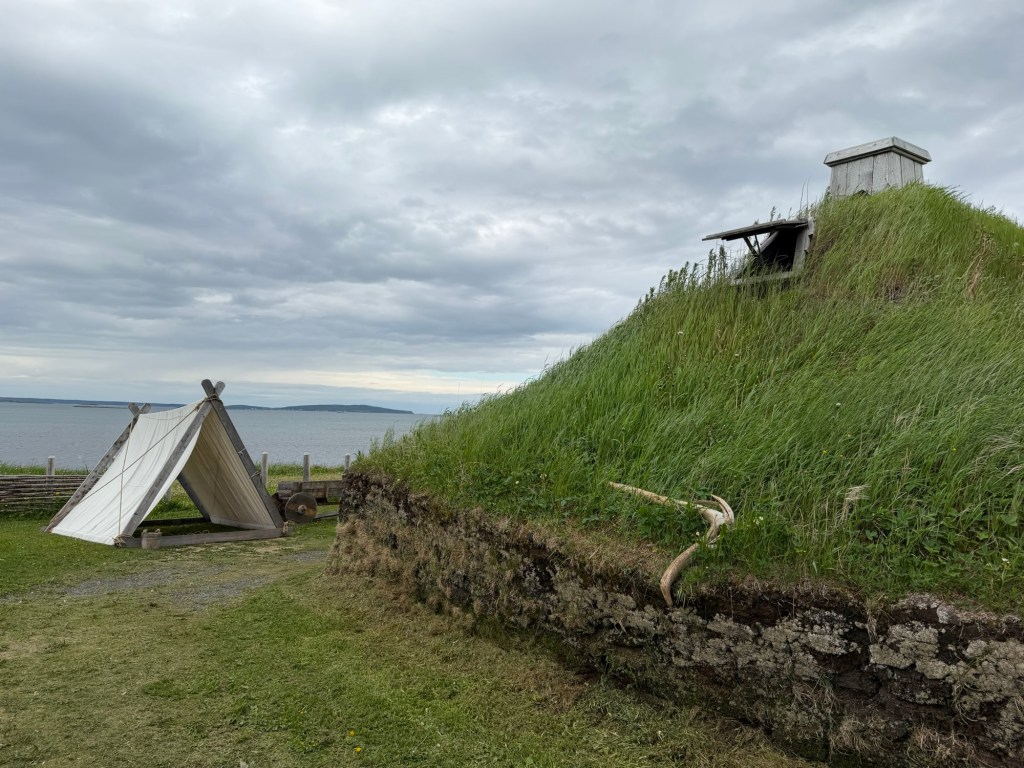
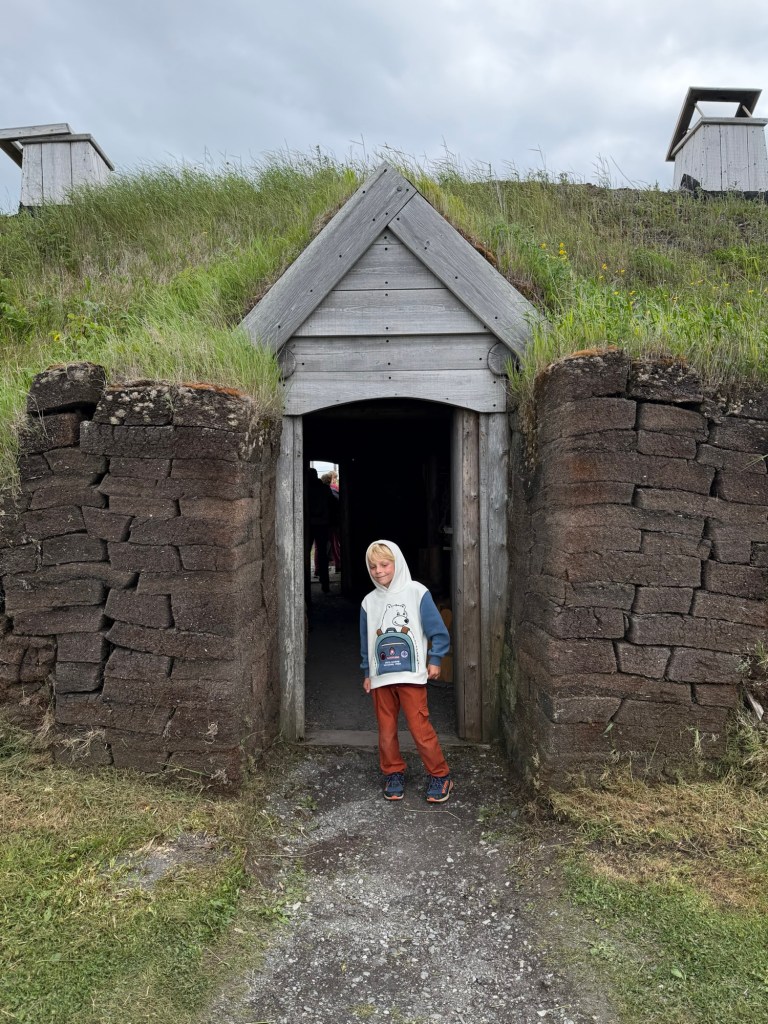
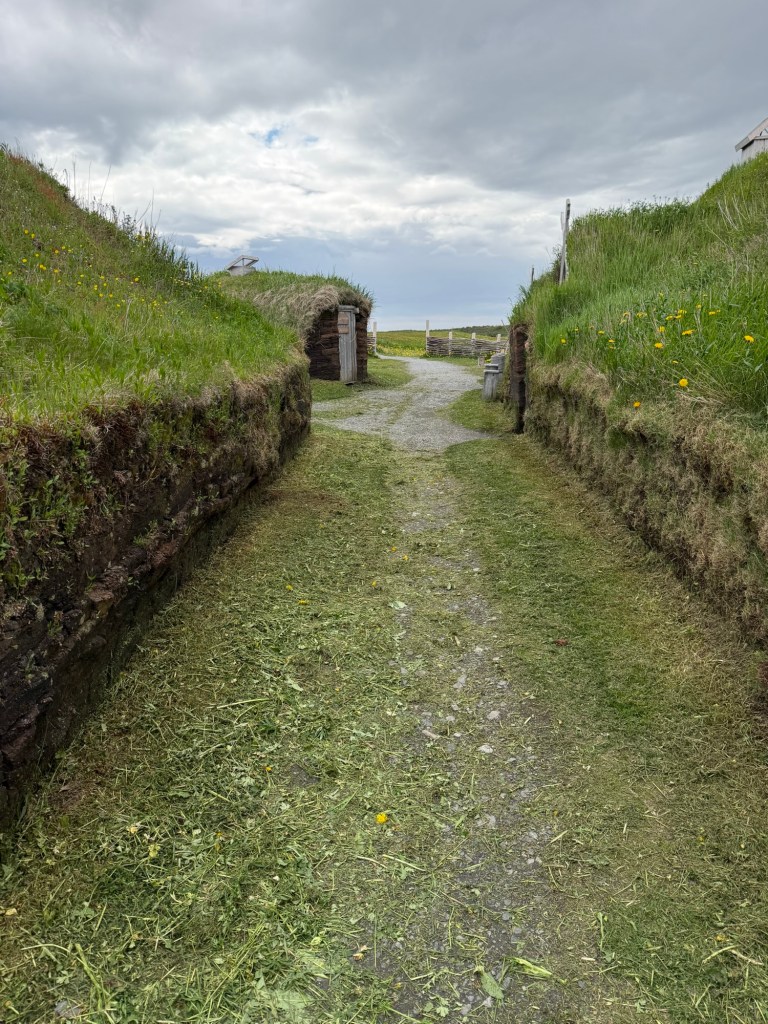
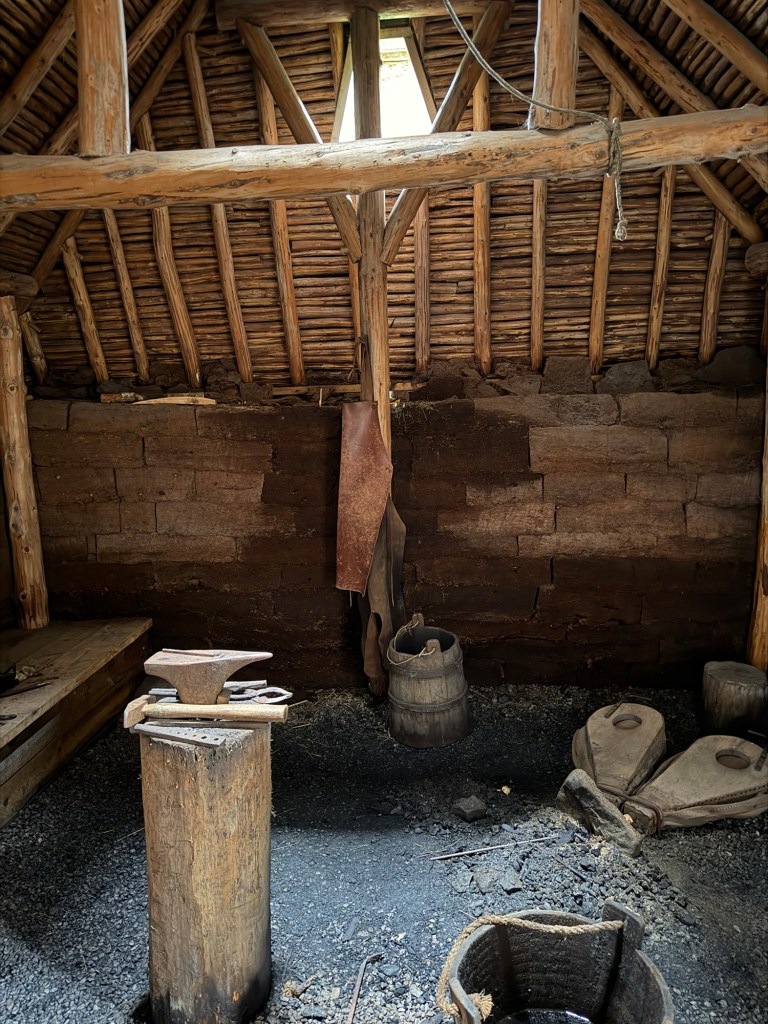
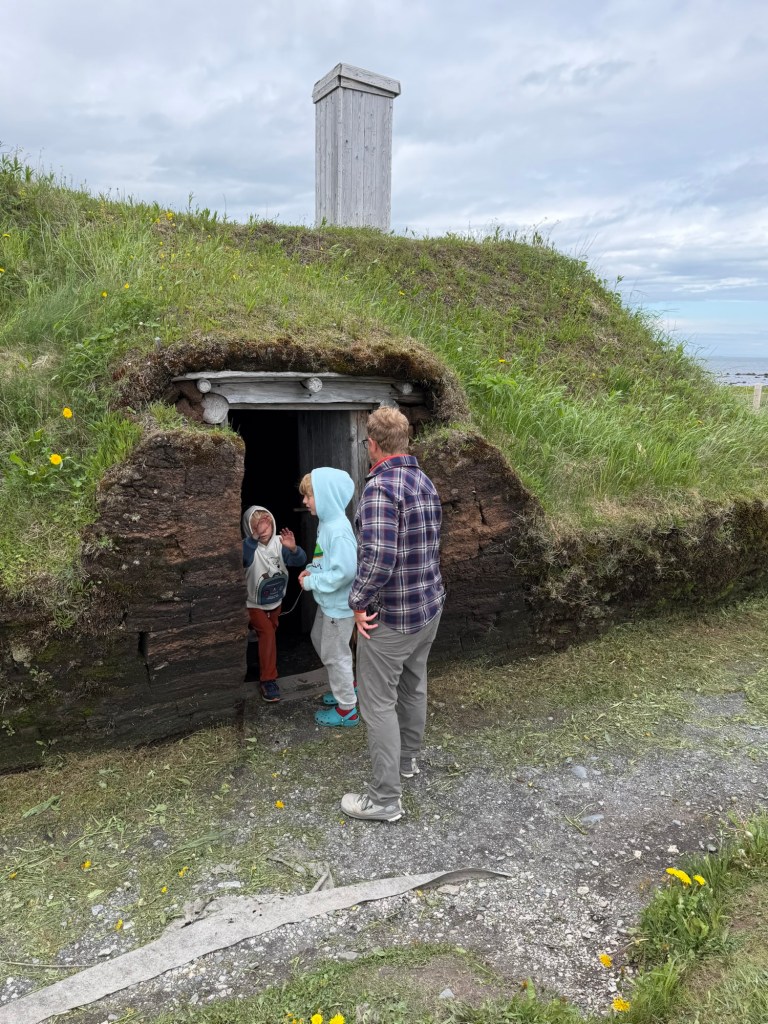
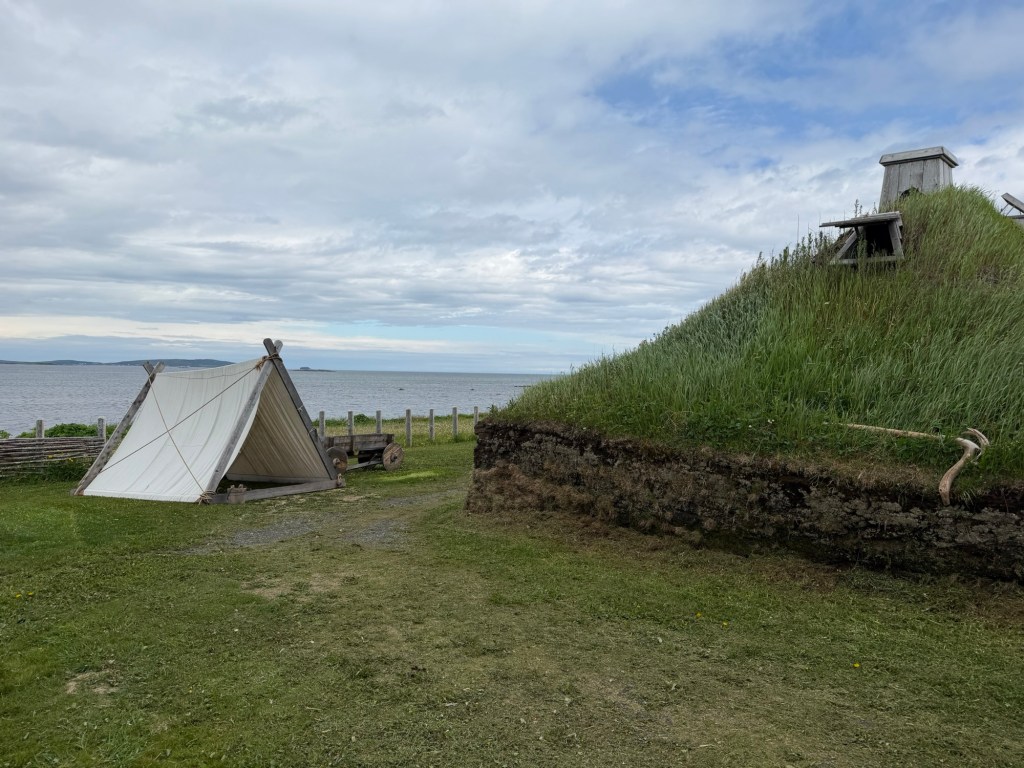
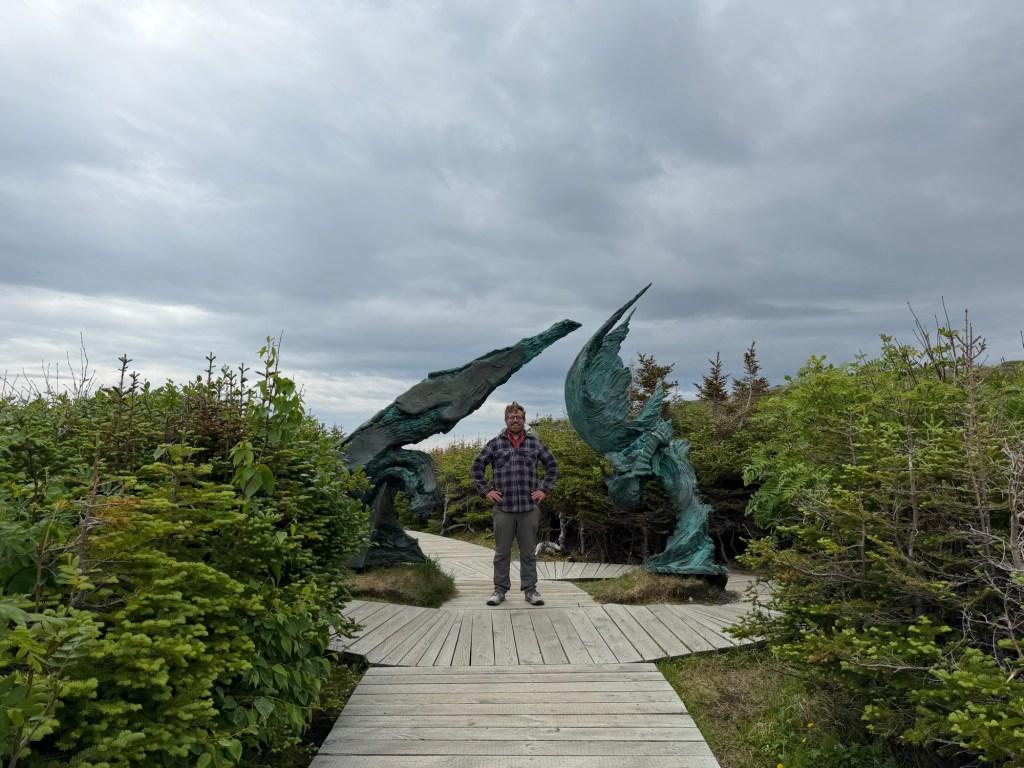
We know of Lief Ericsson from two surviving ancient tales. They were written 200 years later by people who had heard the tales passed down orally. The tales have some differences but the basic idea was the same. Eric the Red got banished from Iceland and set sale for a new home, when he found new land to settle, he returned to Iceland and gathered his family and 25 other families to follow him to “Greenland” which he famously named to slyly convince the others to follow him. When another early sailor was blown off course he reported seeing land to the west that was covered in trees. Years later Eric’s son Lief would purchase the sailors boat and attempt the same path. He went West first and discovered what most scholars agree was Baffin Island, following the coast South they eventually reached an island covered in trees, this is Labrador to our North. Finally they reached a land they called Vinland, after the endless grapes growing there. This third landmass is widely considered to be Newfoundland and areas to the southwest along the St. Lawerence. The tales speak of interactions with native people and many believe the area was eventually abandoned because of hostilities with them. Helge and Anne Stine were a married couple who took particular archaeological interest in these stories and spent years searching for proof. Helge believed the north coast of Newfoundland to be the most likely landing spot and in 1960 set out on a quest. He mainly asked every local he could find if they had ever seen anything strange on their property that looks unexplainable or man made. Locals would give him clues and leads to follow until he was sent to L’Anse aux Meadows, a small fishing community of a few homes. Here a man showed Helge what he thought was a few foundations for some Native structures. Helge had bigger suspicions. They began meticulously excavating the site until they found definitive proof that this was in fact a Viking village. A discovery that would imply that Lief Ericsson made it to the Americas nearly 500 years before Christopher Columbus. Here, the Vikings built elaborate longhouses with thick layers of sod to keep warm, they had buildings to work on the ships and to store food, they built an iron furnace to make nails to repair their ships. Coming from Greenland, this town must have been a relief. This settlement was likely a stop off point for ships traveling from Greenland into the deeper Atlantic Canadian islands. Butternuts have been recovered at Lanse aux Meadows which grow all the way in New Brunswick. Evidence of a more extended network. The defining moment was when a cloak pin was discovered on site that must have been dropped a thousand years ago, it was definitively Norse is design and manufacture and was dated to the exact time when they would have settled here. So little was left behind because this was always designed to be a temporary stop, for three years the people here stocked up on wood and supplies to bring back to Greenland. The plan was always to return and because everything was scarce and valuable, they left very little behind. Trash heaps tell most of the story but even today more mysteries are being unveiled. Recent research have found evidence of ancient sheep parasites perhaps hinting at the existence of sheep at the settlement.
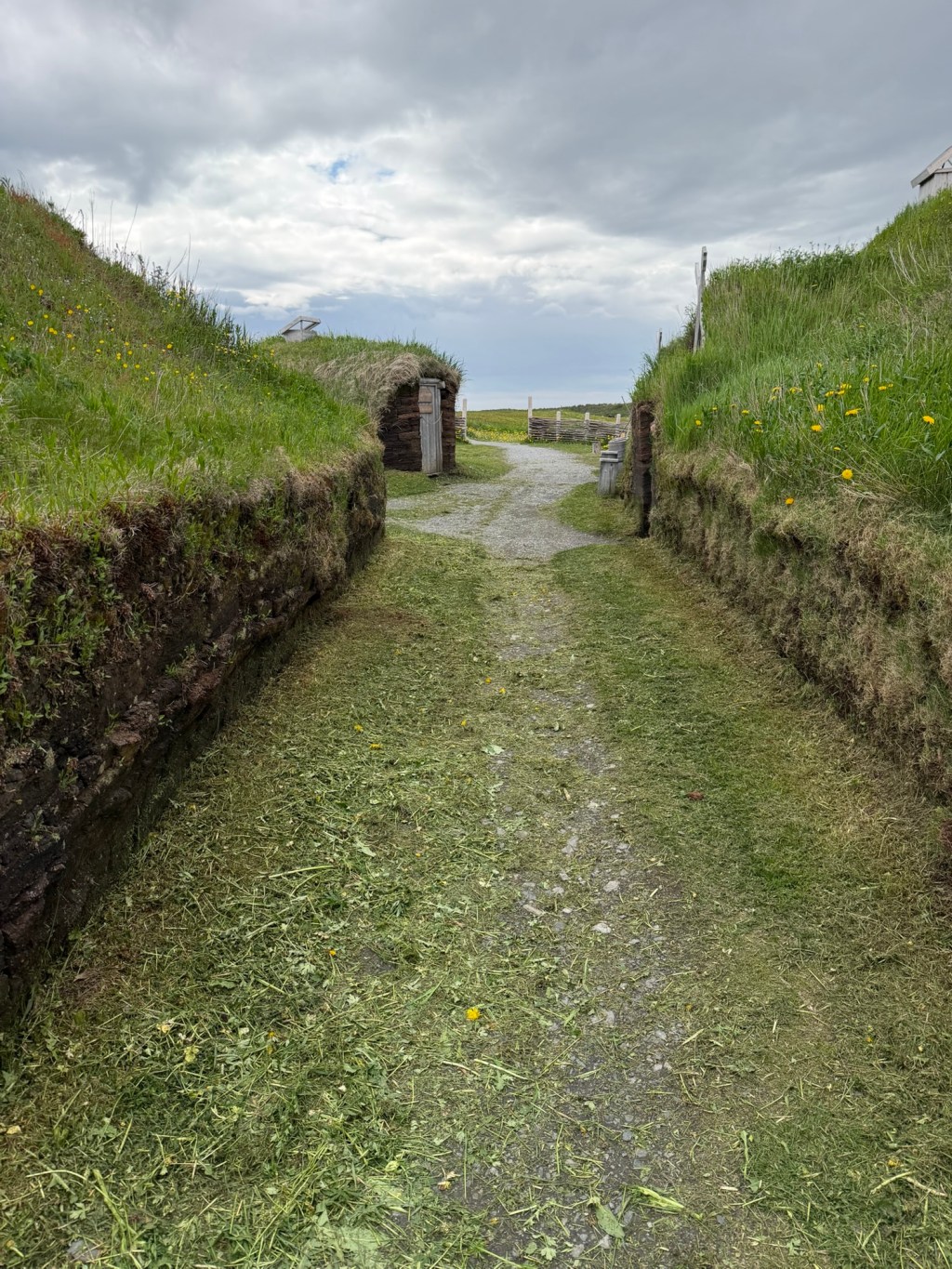
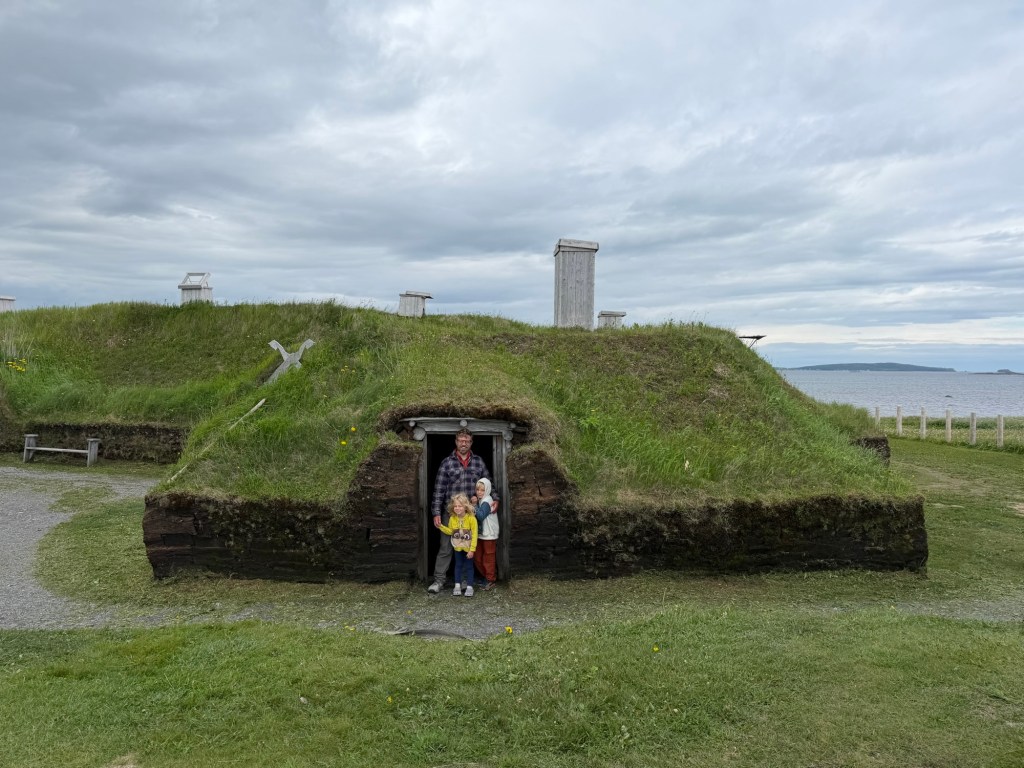
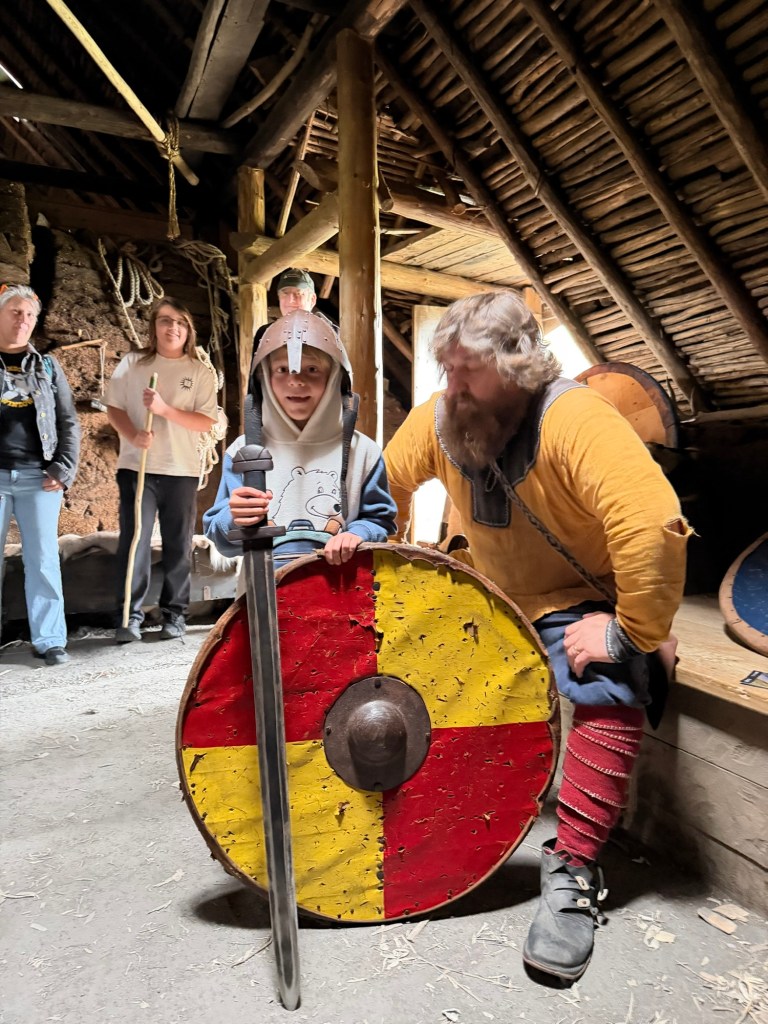
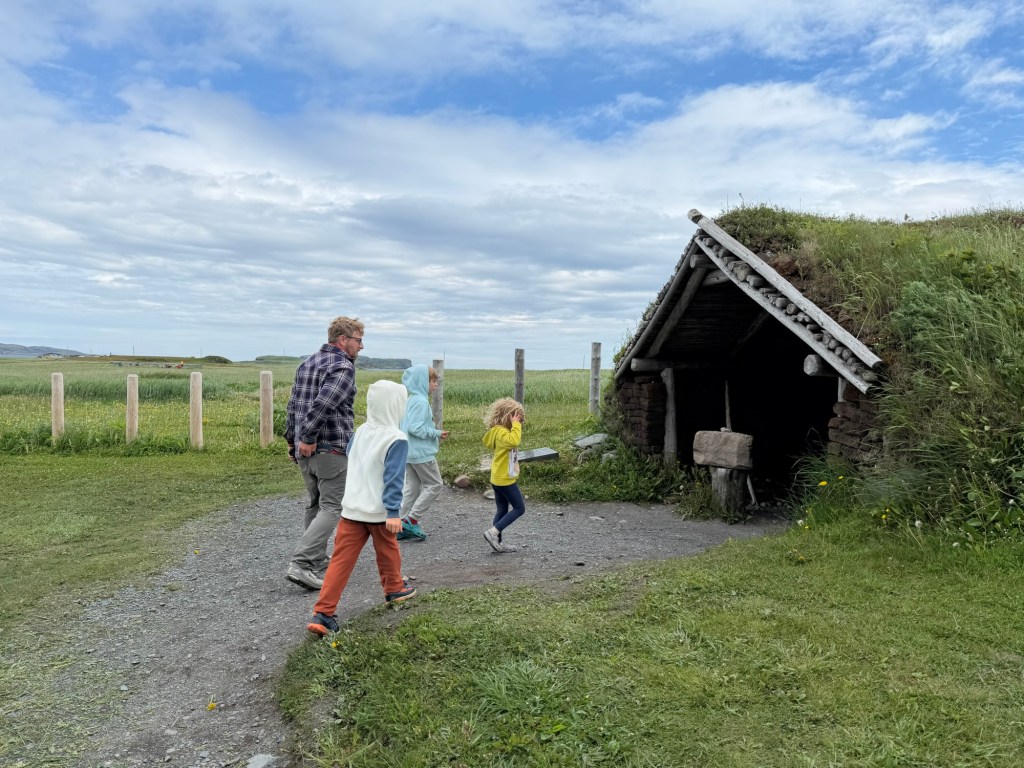
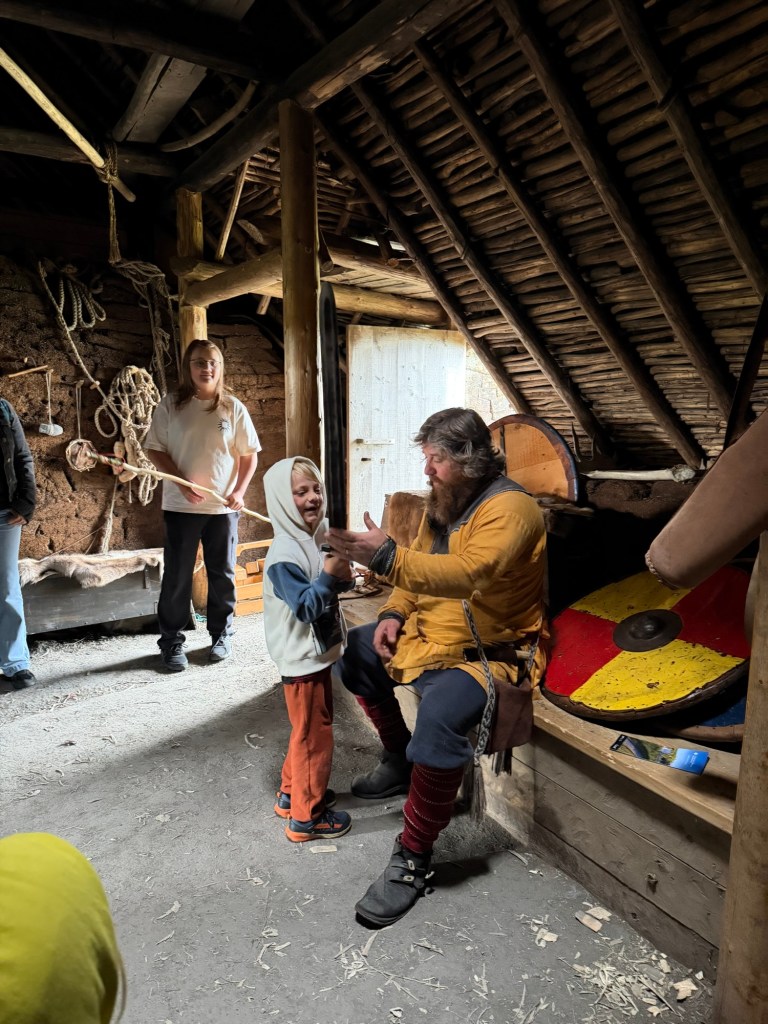
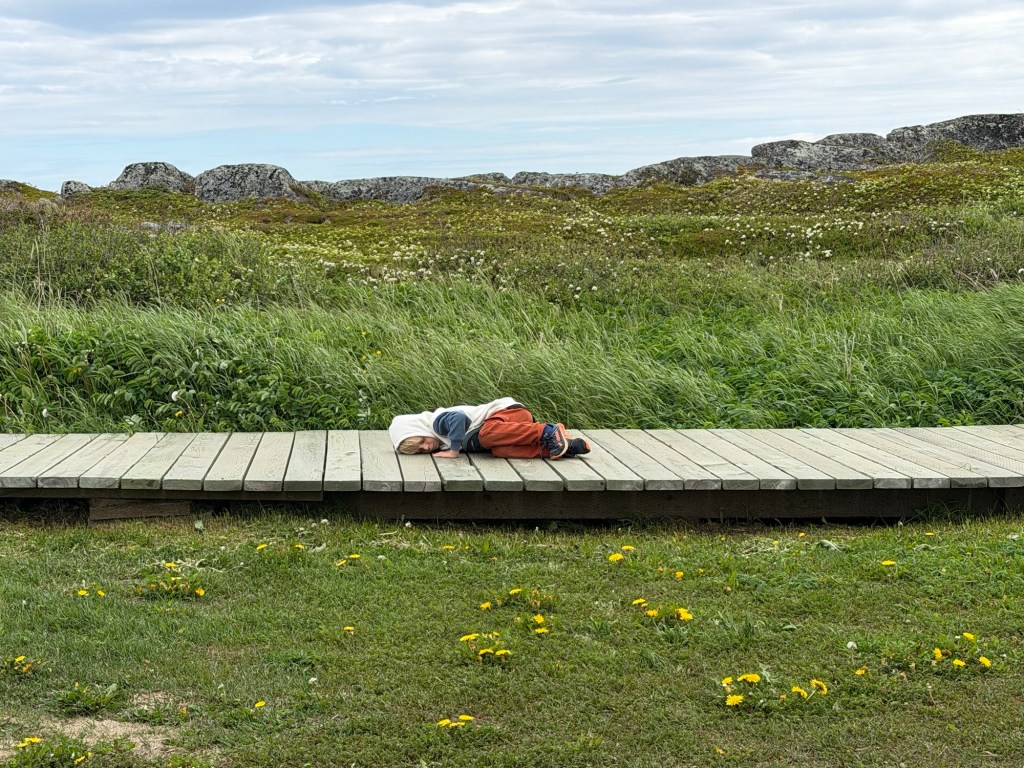
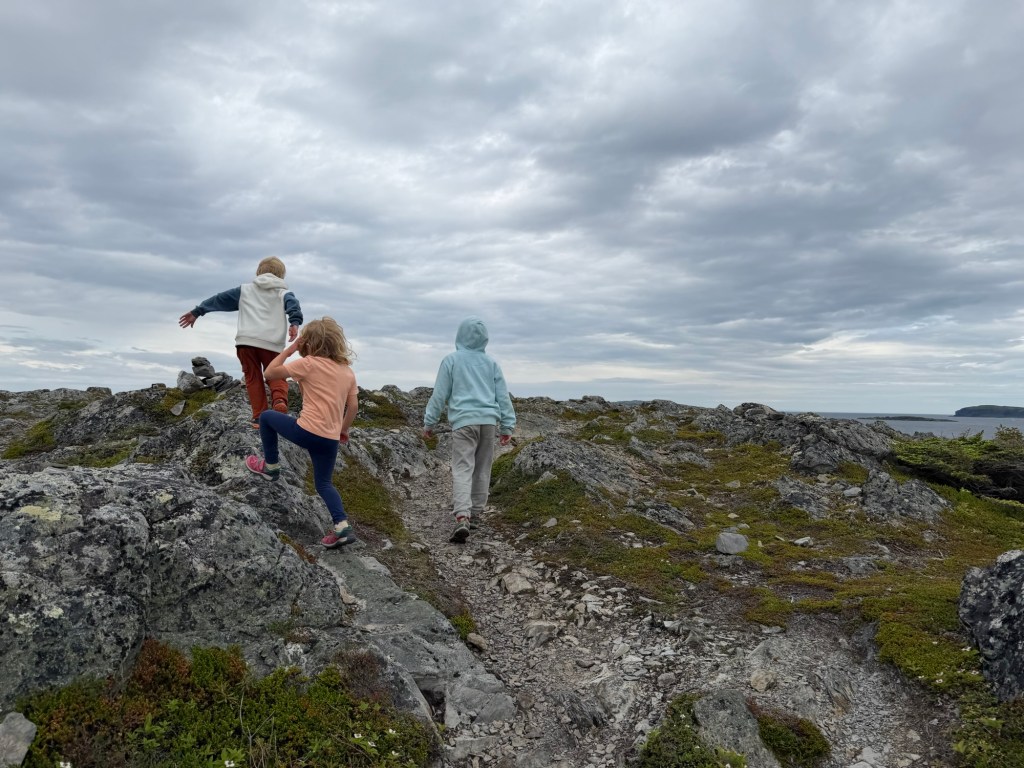
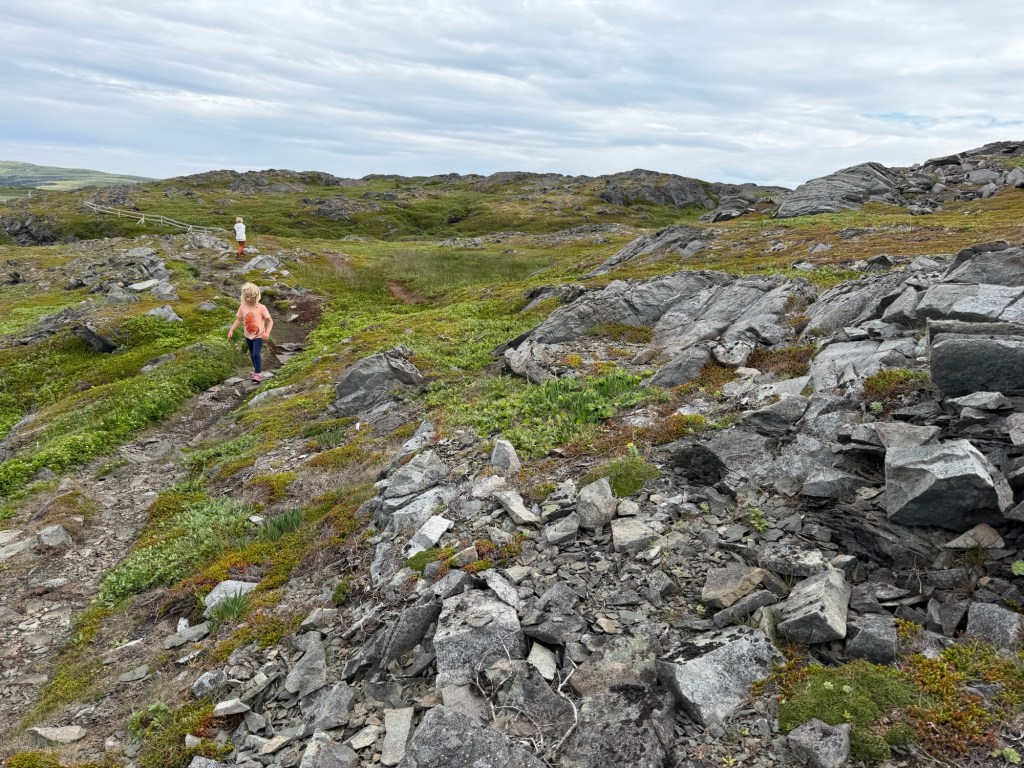
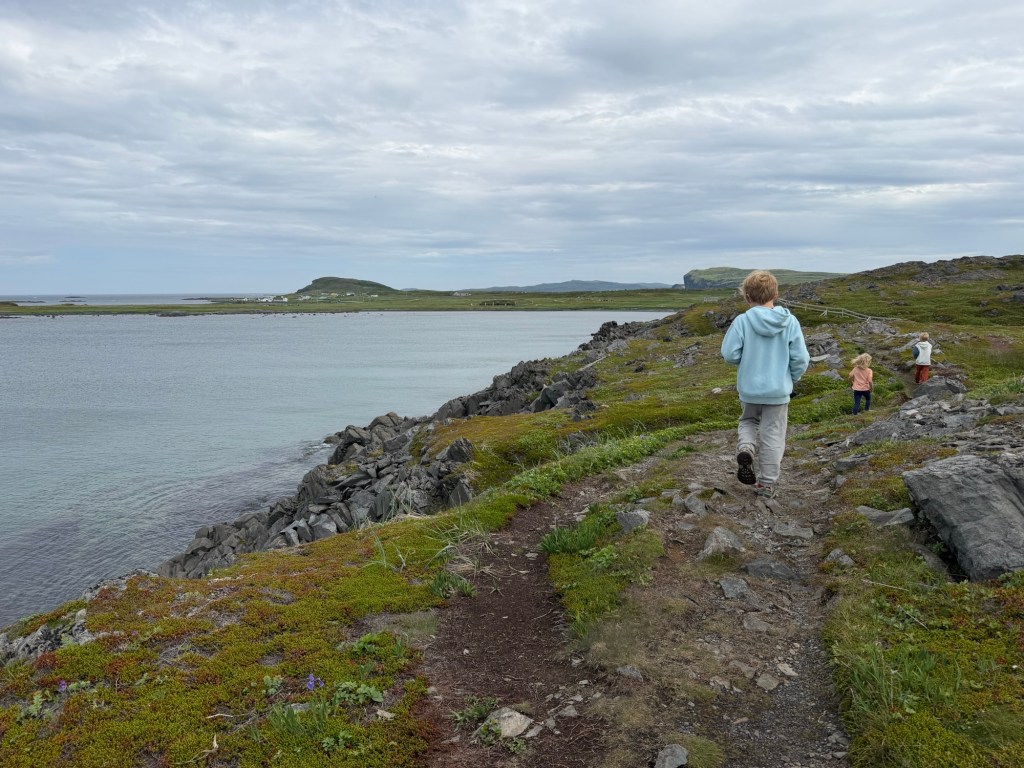
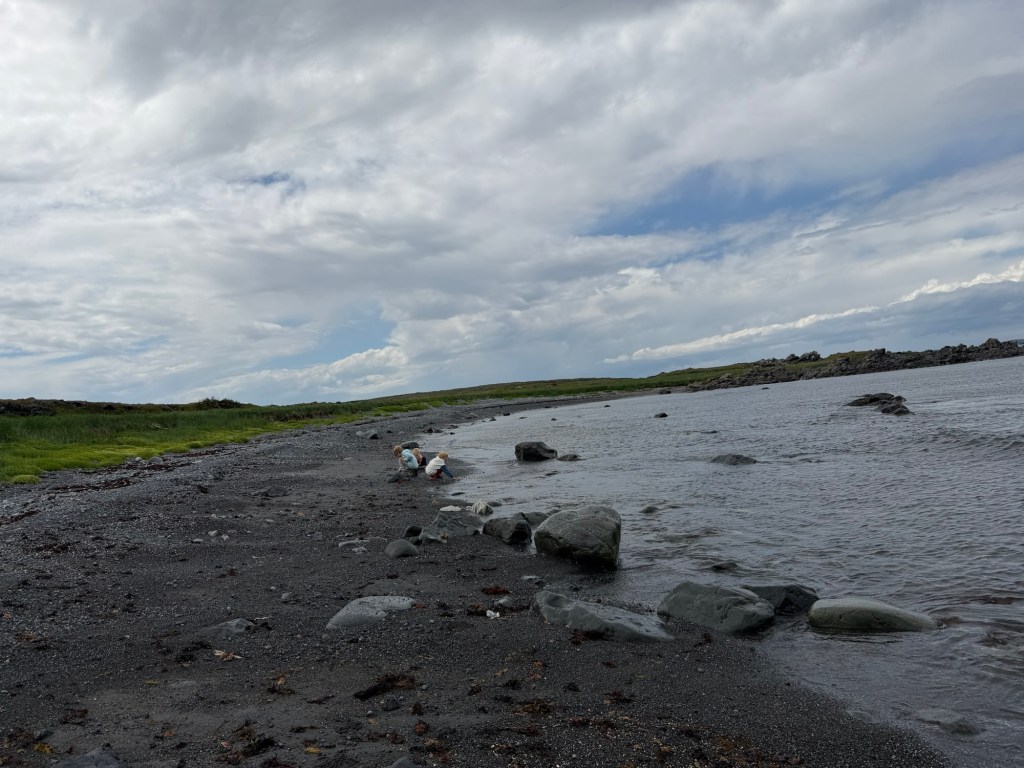
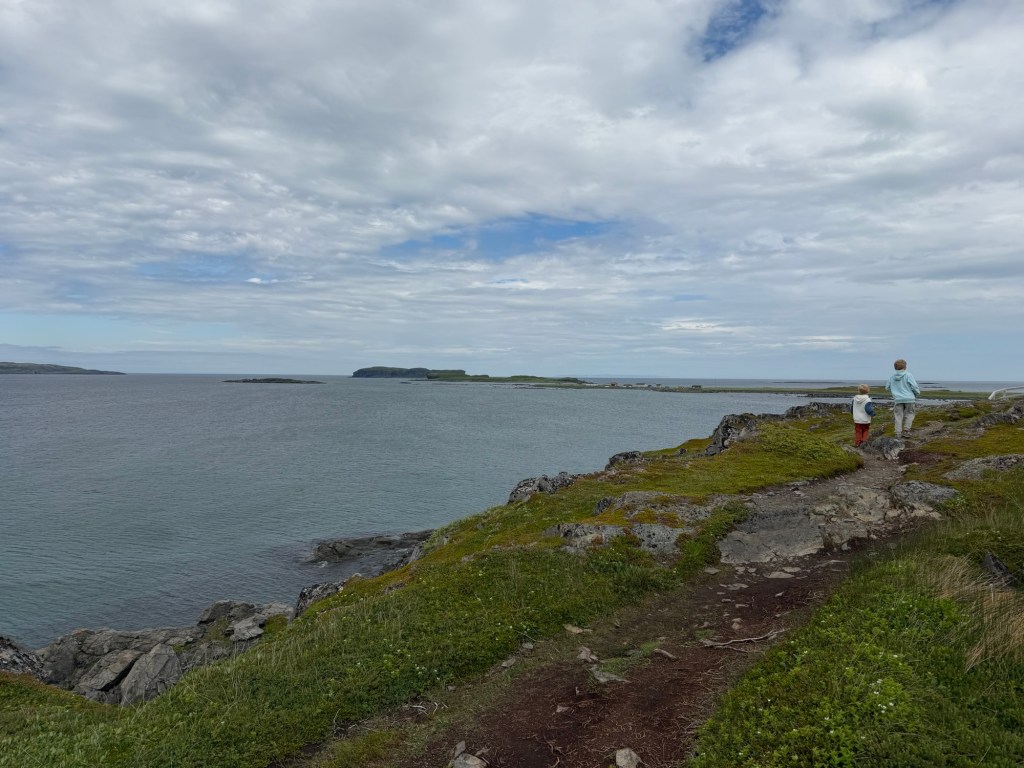
We get to the visitor center when the parking lot is still empty, to our luck, the park ranger is about to start a guided tour of the site. I’ve already read the tales to the kids so most of the info at the visitor center is repetitive but we do get to see the items we read about including the famous cloak pin. Our tour fills in so much more information that I didn’t know I wanted to know. We got to stand in the very foundation of the house Lief lived in. We got to enter some recreated homes which had a few actors trying to authenticate the experience. Fitz got called out by Ragnor and got to try and hold a sword and shield. I was told that I should have been teaching him how to drink already for he is almost a man. He also broke it to Fitz that Everest, my eldest will inherit everything and he will have to work hard for anything. After the tour we redid everything alone, my family patiently allowing my every curiosity. At the end we have a snack and head out on some of the hiking trails near by, gorgeous arctic tundra looking landscapes surround us while we consider what a typical Viking day must have entailed.
Traditionally the term Viking is an adjective for when the Norsemen went on raids but today people freely use the term to describe any Norse people of the time. To this day, this is the only Viking site ever discovered in North America and I hope I am around when they find the inevitable second. From a young age this idea of Vikings landing in America was very intriguing and I had always tried to picture what that must have looked like. I plan much of the trip around what would make my family smile biggest but this is for me. I’ve been wanting to come here for a long time and so I did.
The beautiful thought that I realized today is that if you look back at ancient history and think about the very first people who started to migrate out of Africa and settle all over the world. Some went west, others east and eventually over the frozen Bering straight. At some point a human exploring west would eventually have to be the first person to meet up with someone migrating east. That moment happened here, in Vinland.


Leave a Reply